
blog
The Five Stages of Grief: A Journey with Usher Syndrome
by Sarah Bailey
February 9, 2026
I had always heard that loss follows a five-stage process: Denial, Anger, Bargaining, Depression, and finally, Acceptance. I never imagined that I would step onto the hamster wheel of loss so early in life, or that, 40 years later, I would still be running. What I didn’t know then is that this wheel wouldn’t break me. It would build me.
Denial
The first stage of grief involves a refusal to accept the reality of the situation, serving as a defense mechanism to buffer the immediate shock of the loss.
I was diagnosed with Usher syndrome type 2A when I was about eight years old. Looking back, my mom introduced the reality of my diagnosis with incredible wisdom. She had me read The Story of My Life by Helen Keller. At the time, I didn’t know who Helen Keller was. After reading her story, I was in awe. Here was a girl who was deaf and blind, yet she learned, grew, and changed the world. That book planted a seed. One that would quietly grow with me over the years.
I already knew I was hard of hearing. I had worn bilateral hearing aids since the age of three, and that alone set me apart from my peers. Then my mom gently explained that one day, I would lose my vision too. I was just a kid. I couldn’t fully grasp what that meant. Maybe I understood more than I realized, or maybe I chose denial. As a child, I was certain blindness wouldn’t really happen to me. I was okay for now, so why worry? Either way, that was the moment I first stepped onto the hamster wheel of loss—and I’ve been learning how to run it ever since.
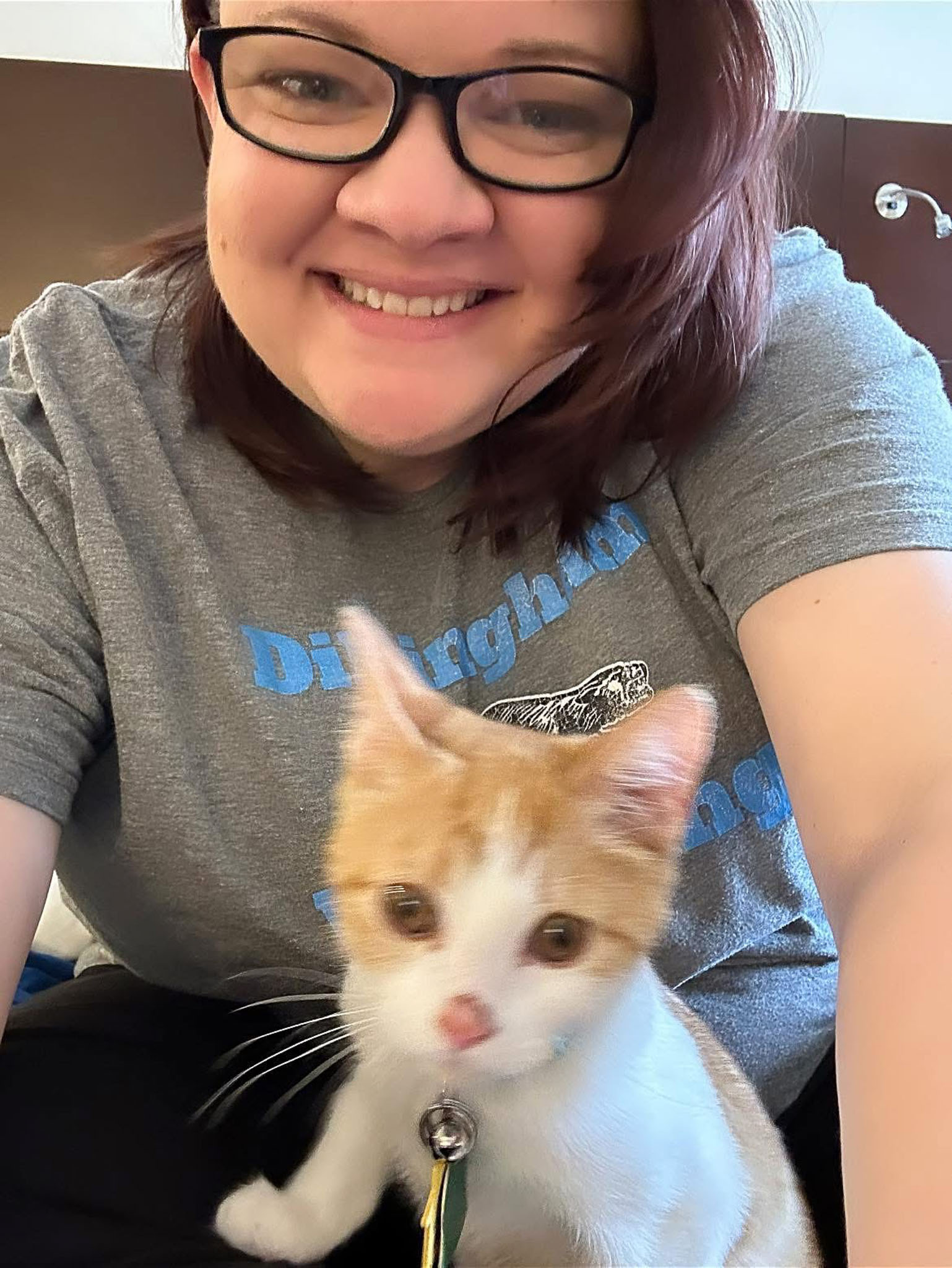
Sarah Bailey smiles in a photo with a white and orange tabby kitten.
Anger
As denial fades, the pain begins to surface, often manifesting as frustration, resentment, or a feeling of “Why me?”
That belief eventually gave way to anger. Quiet, unrecognized anger that simmered beneath the surface. No one in my family had hearing loss, let alone faced the reality of becoming deafblind. There was uncertainty, fear, and a lot of silence. Thanks to years of counseling and self-reflection, I now have the tools to recognize this stage when it comes. My anger no longer lives in silence. I allow myself to feel, to process, and to heal without shame.
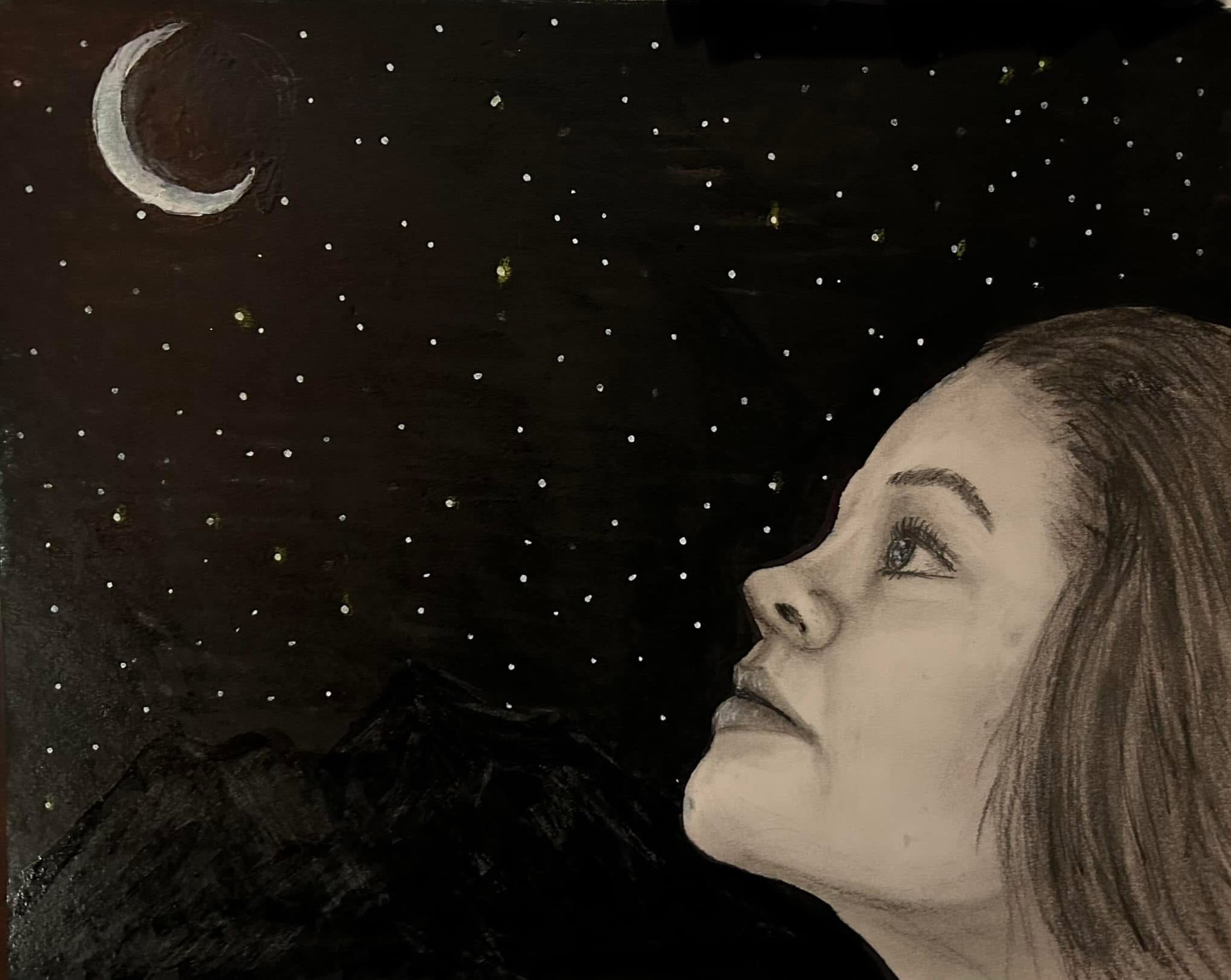
A hand-drawn artwork shows a night sky filled with many small white stars scattered across a deep black background, there is a crescent moon hangs in the upper left corner and on the right side of the image, a young woman’s face is shown in profile and she looks up the the sky and moon.
Bargaining
In this stage, one might try to negotiate a way out of the pain, often making “if only” or “what if” statements to regain a sense of control.
Over the years, I moved through the stages again and again. Usher syndrome is progressive. With each new change in my vision, the cycle begins again. The wheel doesn’t stop, but neither do I. Through it all, my mom did everything she could to prepare me. She enrolled me in summer programs at the School for the Blind and made sure I learned Braille during the school year. At the time, I went along with it without much thought. Looking back, those moments were powerful acts of love and early lessons in navigating the “what ifs” of my future.
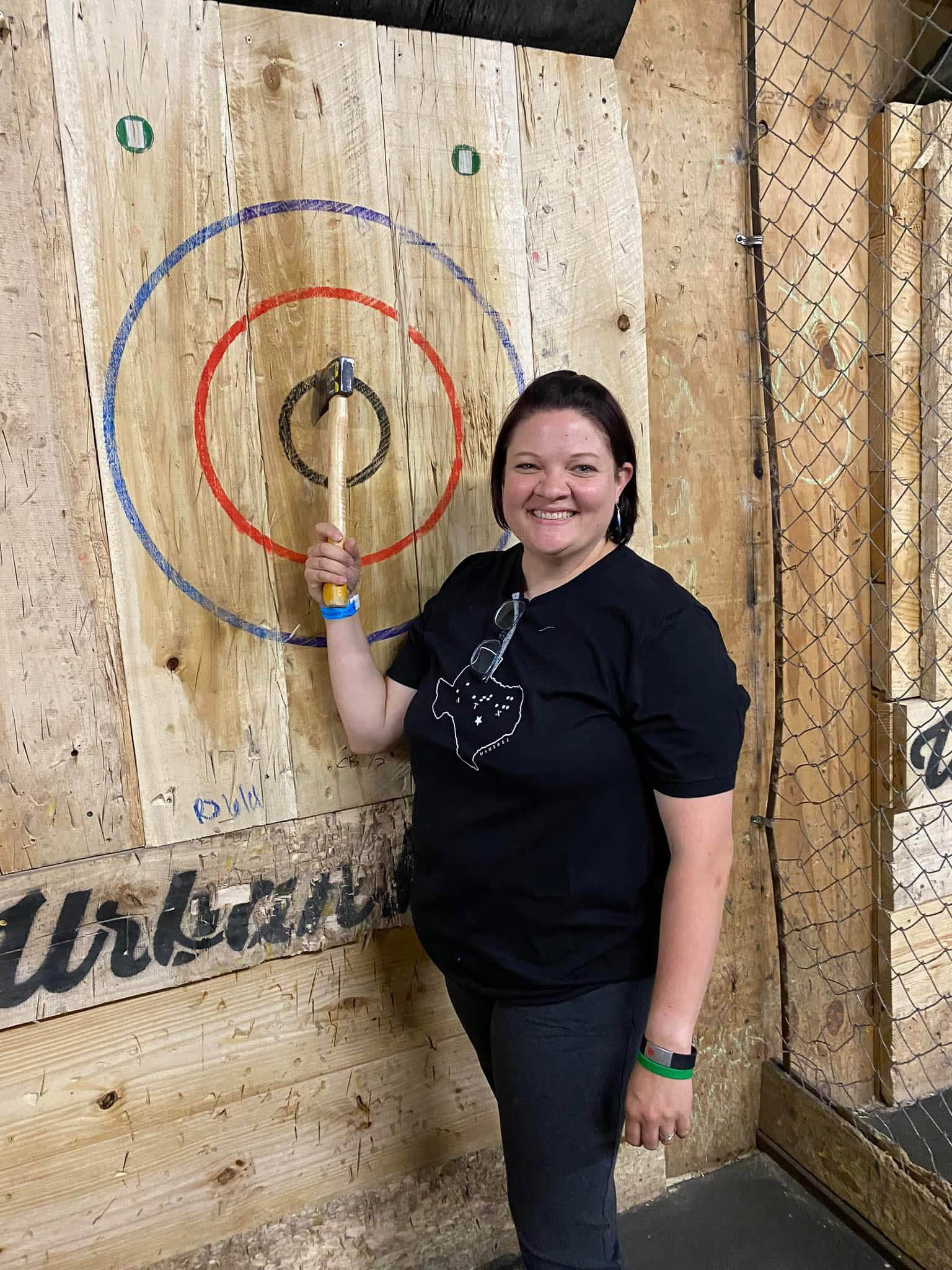
Sarah Bailey stands in front of an ave throwing target on a wooden wall. She is smiling and holds the handle of an axe which sticks directly into the center of the target.
Depression
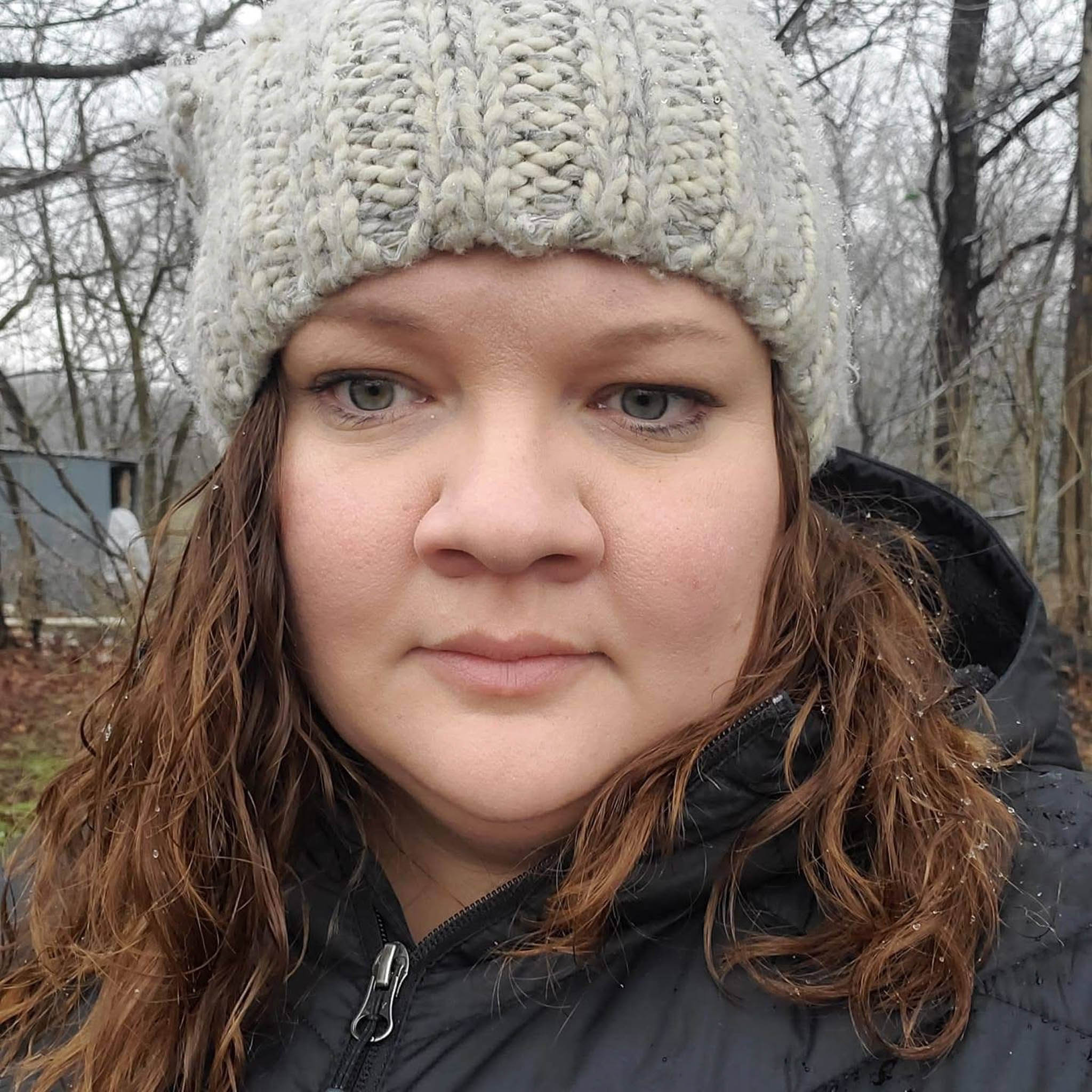
A selfie photo of Sarah Bailey, She is outside and wears a gray knit beanie and has medium length brown hair.
This stage represents the deep sadness and emptiness that occurs when the full weight of the loss is realized. It is a period of withdrawal and reflection.
Depression was the stage that challenged me the most. Combined with other childhood hardships, it led me through some very dark years. I questioned my worth. I questioned my future. I wondered if there was a place for someone who was going deafblind. But even in those moments, something inside me held on. Today, my depression is more manageable. I’ve learned the power of community. Surrounding myself with people who are compassionate, understanding, and walking similar paths has made the journey less lonely and far more meaningful.
Acceptance
Acceptance is not necessarily about being “okay” with the loss, but rather acknowledging the new reality and learning how to live and move forward within it.
Today, at 40, I’m still on the hamster wheel, but it no longer scares me. I know this terrain. I know the turns. And I know that each time my vision shifts, my world shifts too. I adapt. I grow. I keep going. I don’t love having Usher syndrome, but I believe God has given me purpose through it.
I was a teacher. I taught my students about Helen Keller, Braille, and sign language. And I am still a teacher today, just in a different way. I was an artist. My first national recognition came from using my art to express the stages of loss experienced with Usher syndrome. I am still an artist. My techniques will evolve as my vision changes, but now I create as The Deaf/Blind Artist. And that identity is not a limitation, it’s a legacy in progress.
I was once a victim of circumstances I couldn’t control. Now, I am an example of what happens when resilience meets purpose. Nothing will hold me back, because I refuse to limit myself. It’s a mindset. I’m an advocate. I’m a creator. I’m a teacher. And most importantly, I’m not alone.
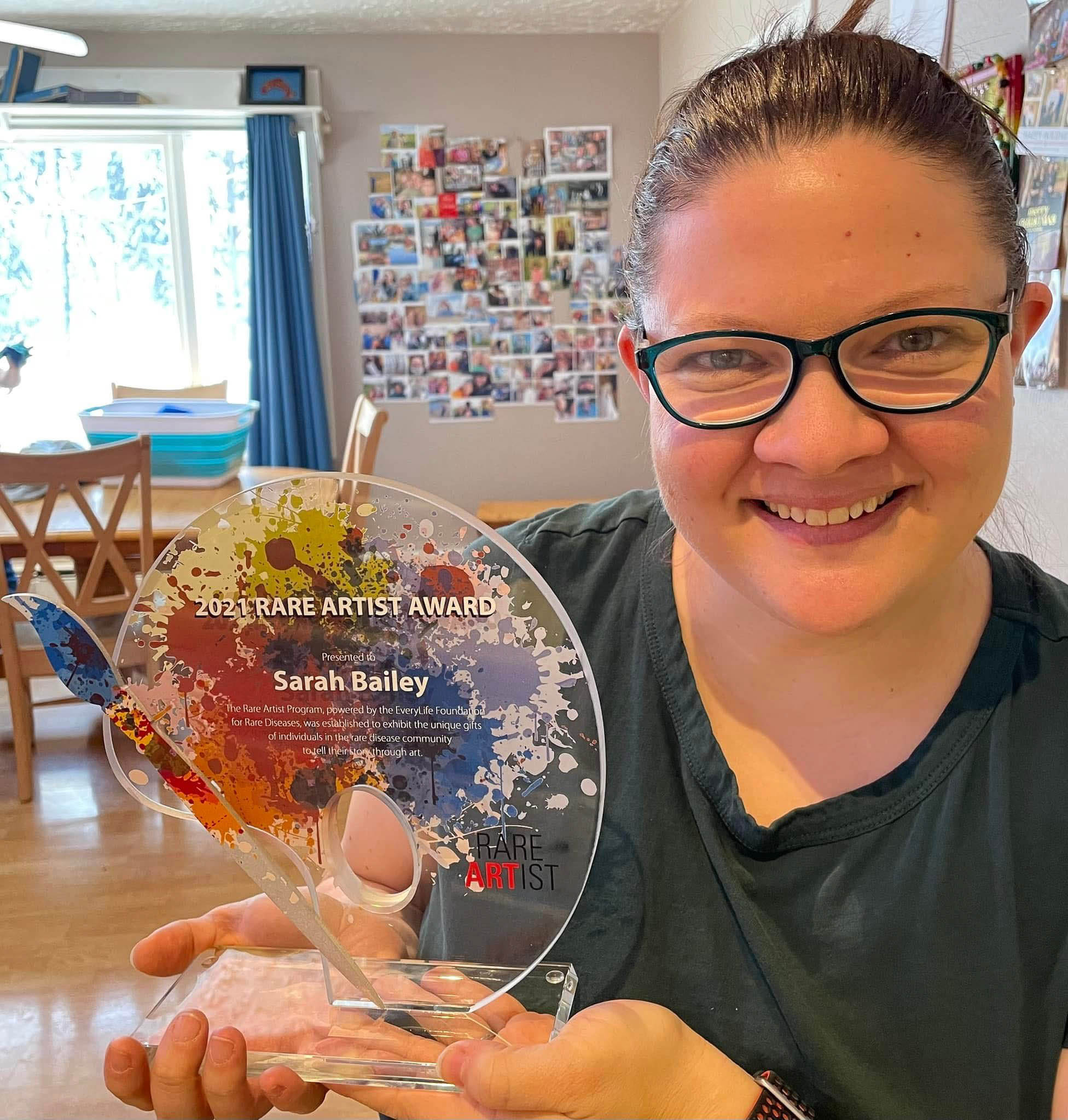
Sarah Bailey is smiling at the camera and holding up a glass award in the shape of an painter’s palatte. The award says “2021 Rare Artists Award”.
Explore more Blog posts
See Us Hear Us: An Immersive Gallery Fundraiser
blog See Us Hear Us: An Immersive Gallery Fundraiserby Pamela AasenJanuary 12, 2026 On Thursday, October 23, I had the privilege of attending the incredible ‘See Us Hear Us’ fundraising event at Artechouse NYC, a premier venue in Chelsea known for hosting...

Moving Forward
blog Moving Forward by Americo CastilloNovember 29, 2025 Every 4 to 17 per 100,000 people—approximately 400,000 people worldwide—live with Usher syndrome. As a 17-year-old junior at Soquel High School in Capitola, California, I am one of them. Like any other student,...
Celebrating My Grandsons on Usher Syndrome Awareness Day
blog Celebrating My Grandsons on Usher Syndrome Awareness Day by Fran HickmottOctober 13, 2025 Every year when Usher Syndrome Awareness Day arrives, my mind turns to the journey of my grandsons, Ethan and Gavin. When Ethan was on the way 24 years ago, I pictured a...
Help us find treatments and a cure.