blog
Moving Forward
by Americo Castillo
November 29, 2025
Every 4 to 17 per 100,000 people—approximately 400,000 people worldwide—live with Usher syndrome. As a 17-year-old junior at Soquel High School in Capitola, California, I am one of them. Like any other student, I have my whole life ahead of me, and I’m determined to use the unique challenges of living with this condition to fuel my growth and achieve my goals. While my long-term path isn’t entirely clear yet, I know my immediate mission is to advocate and raise awareness for individuals who need additional support to succeed. This passion stems directly from my own experience navigating high school life with Usher syndrome.
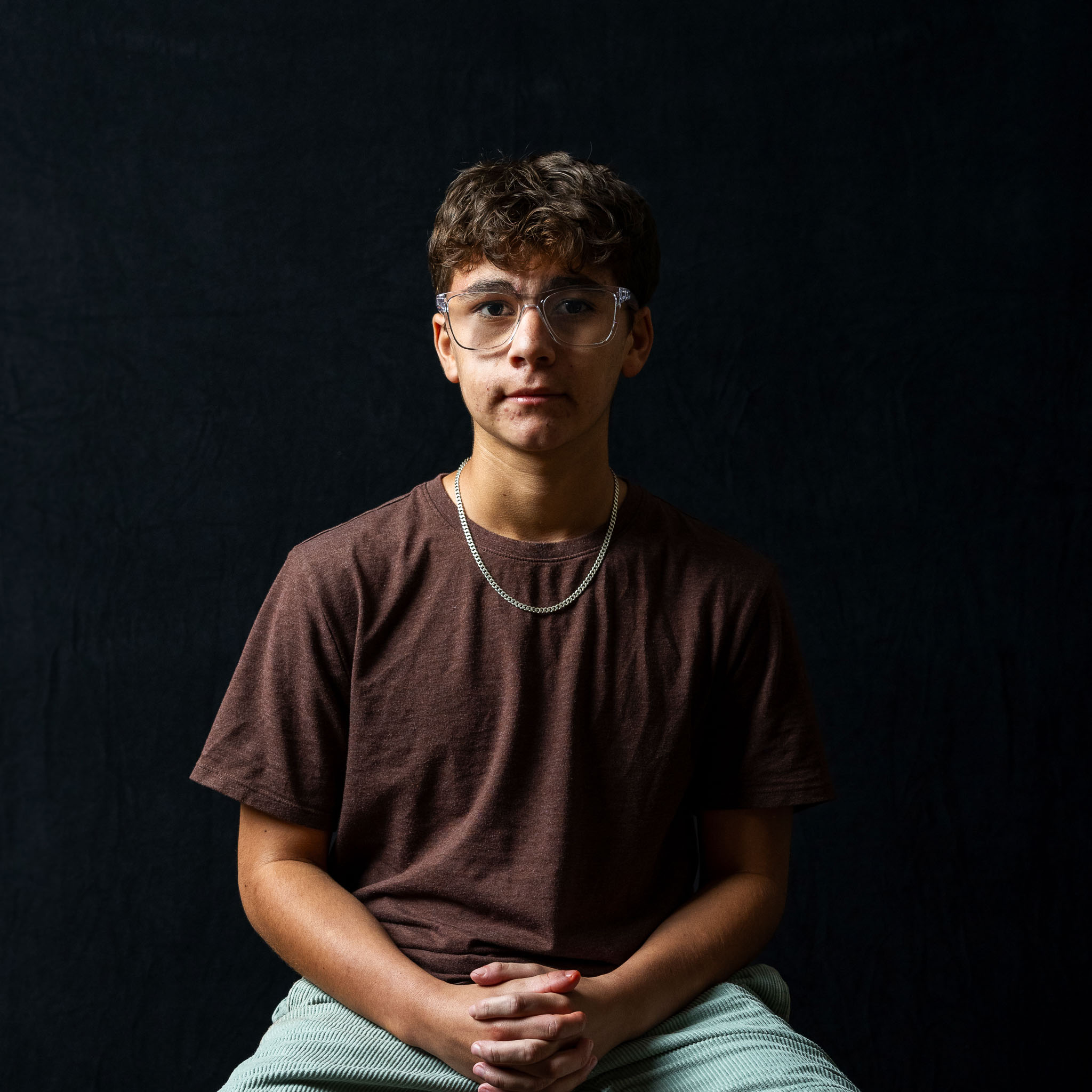
A portrait of Americo Castillo taken for the Usher Syndrome Society’s Shine a Light Portrait Exhibit
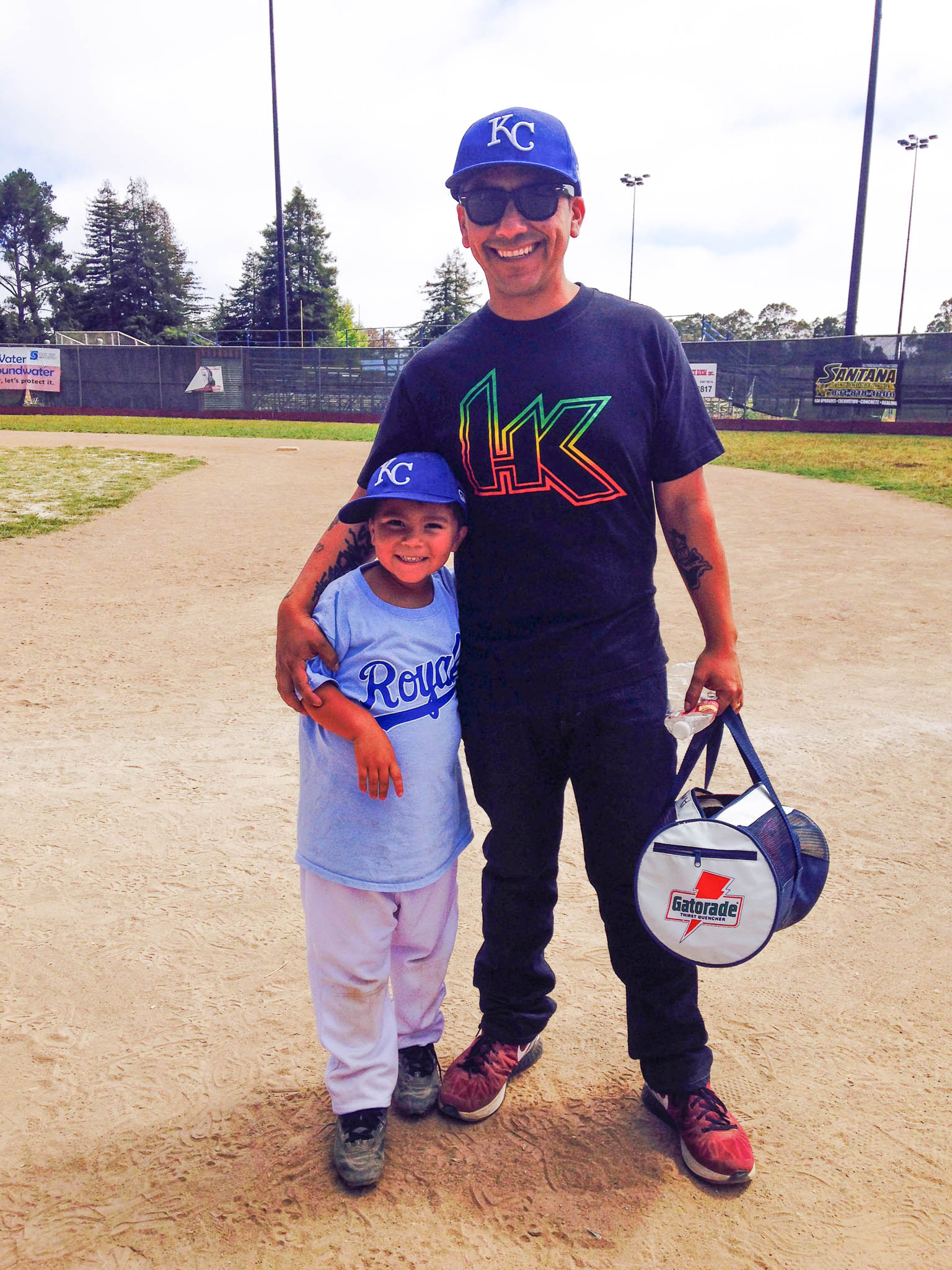
Americo Jr, when he was 6 years old, is at a Little League game with his dad, Americo Sr, at a little league game.
The Hard-Earned Realization
Even though I know I want to advocate now, that realization wasn’t initially clear. It took a lot of rough times and figuring things out. I first discovered I had Usher syndrome when I was 12 years old, in the 6th grade. After years of playing baseball, the main thing that brought me joy, I began noticing I had more difficulty than my teammates seeing the ball. It was like the ball was invisible at times, and it was affecting my performance. When I finally brought this up to my parents, they explained my condition and how my vision and balance were worsening because of it. I didn’t just learn what I had, I learned what I might lose. I don’t think I fully grasped the implications, all I really heard was that I needed to work harder to achieve my goals. Being told I was visually impaired didn’t really register either and it didn’t even cross my mind how this may affect me in the future or what it even meant. And honestly, I really didn’t want to think about it then.
This changed as I got older and the effects of Usher syndrome began affecting my daily life. I would stumble and trip over obstacles in my path because I couldn’t see them. Trying to manage the normal social and academic pressures of high school is already difficult, but having a disability like Usher syndrome brings the stress to another level. Knowing I am the only person in my school, and likely the entire county, with this condition makes me feel totally isolated and sometimes can lead to depressing thoughts about what the future may hold for me. For example, in 10 years will my vision be the same? Will I still be able to hear? Will I be able to function in society? How will I get around? Will my peers ever understand who I really am?
Creating New Lenses
Even now, I don’t think I’ve fully processed or fully understand the long-term impact Usher syndrome will have on my life. It’s a constant, evolving realization that will continue to shift as I get older. In a strange way, I’ve realized that if I had never received the diagnosis, I might not have noticed the difference for a long time. While my visual struggles would have eventually become obvious, the reality is that the way I experience the world, has always been my normal. I can’t know how others perceive things, just as they can’t know my perspective. Usher syndrome may take away some of my vision, but what it’s really doing is creating new lenses through which I understand my resilience in this world.

A picture of the Castillo family, from left to right Americo Sr, Olivia, Americo Jr, and Siena.
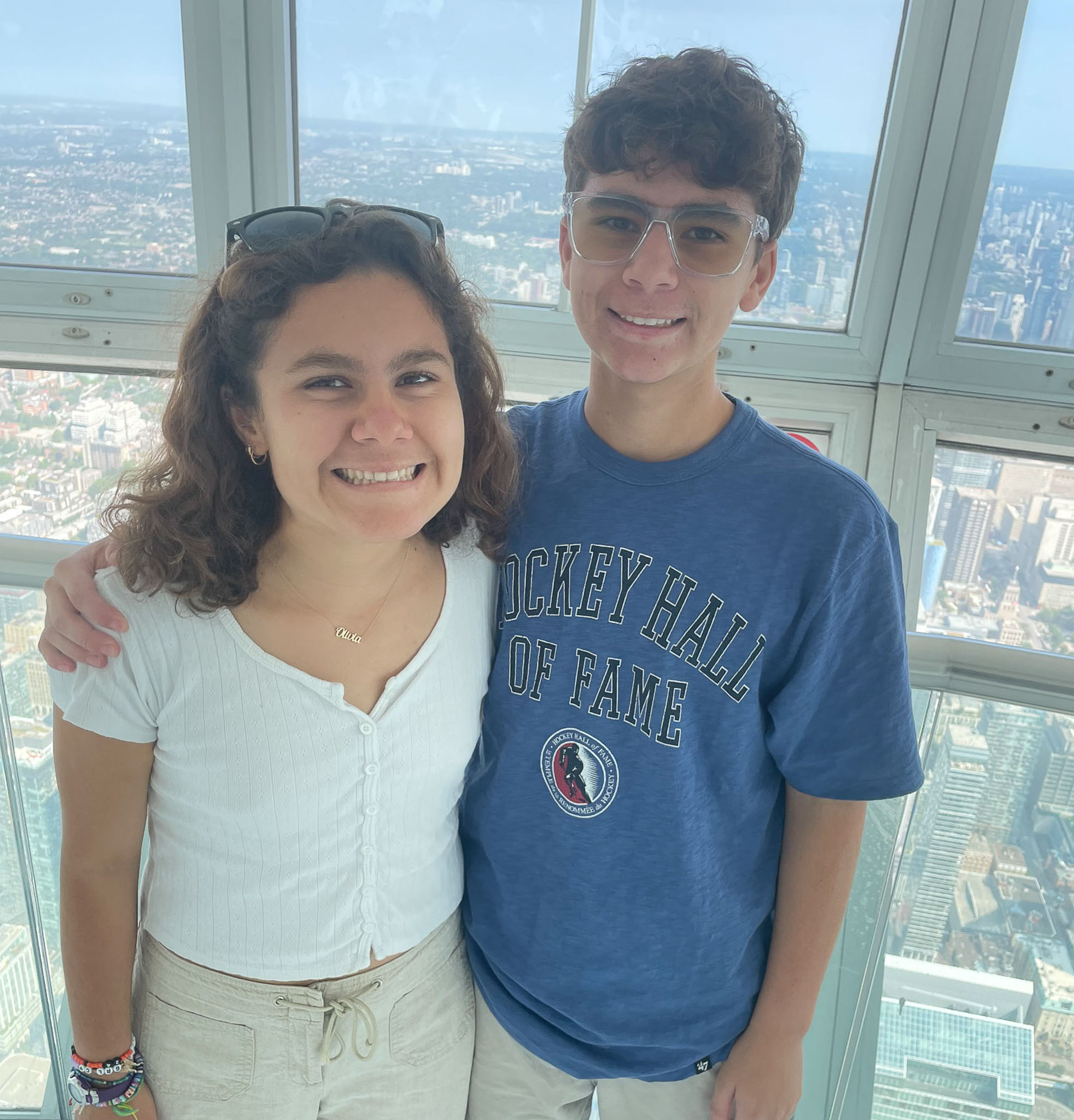
Amercio, with his sister Olivia, standing at the top of CN tower.
The most recent challenge I’ve faced is one that every 17-year-old goes through: driving. Recently, all my friends have been getting their licenses, and it has been very hard to speak with them about it. It begins with, ‘Have you gotten your license?’ and then, ‘When are you getting it?’ Which leads to,’ Why aren’t you getting it?’ When I try to deflect, the frustrating suggestions roll in: ‘Oh, just wear glasses. Or contacts. They only test your central vision, right?’ I’ve had this conversation at least once a week since the beginning of the year. This is stressful because I keep a lot of personal things to myself, meaning none of my friends know that I am visually impaired. I have kept it a secret mainly because I don’t know how they might react. Will they be mature and understanding? Or will I be met with stereotypical jokes? I especially dread telling them about Usher syndrome, only to hear the inevitable response, ‘Usher, like the singer?’ I have begun to work through this fear because the weight of this secret has been a lot and I have realized my advocacy needs to start with my friends.
My older sister actually has Usher syndrome, too, which despite making sense that two siblings would have the same condition, Usher syndrome itself is quite rare. The chance of inheriting the recessive gene is 25% for each child and the odds of two siblings sharing the condition is a really low 6.25%. However, though my sister may have the same condition as me, it is quite different. She was born with hearing loss that continues to progress, while I have not experienced hearing loss yet. And ironically, her vision has progressed slower than mine. Being able to live with someone who also has this condition and share experiences has made me feel profoundly grateful and appreciative. Because of her, I can confidently say that I am not alone.
The Invisible Barriers
Living with this condition means navigating a world that isn’t built for me. My vision loss affects more than what I can see, it shapes where I can go and what I can participate in. Things most students take for granted, like walking through dim hallways, sitting in a darkened classroom, or going to school events, can become anxiety-provoking and feel unsafe. Even when I push myself to go, the anxiety of moving through uncertainty can feel isolating. These are invisible challenges only I can see, that separate me from others that do these things free of anxiety. Most people never notice how much effort it takes for me to do something they do without thinking.
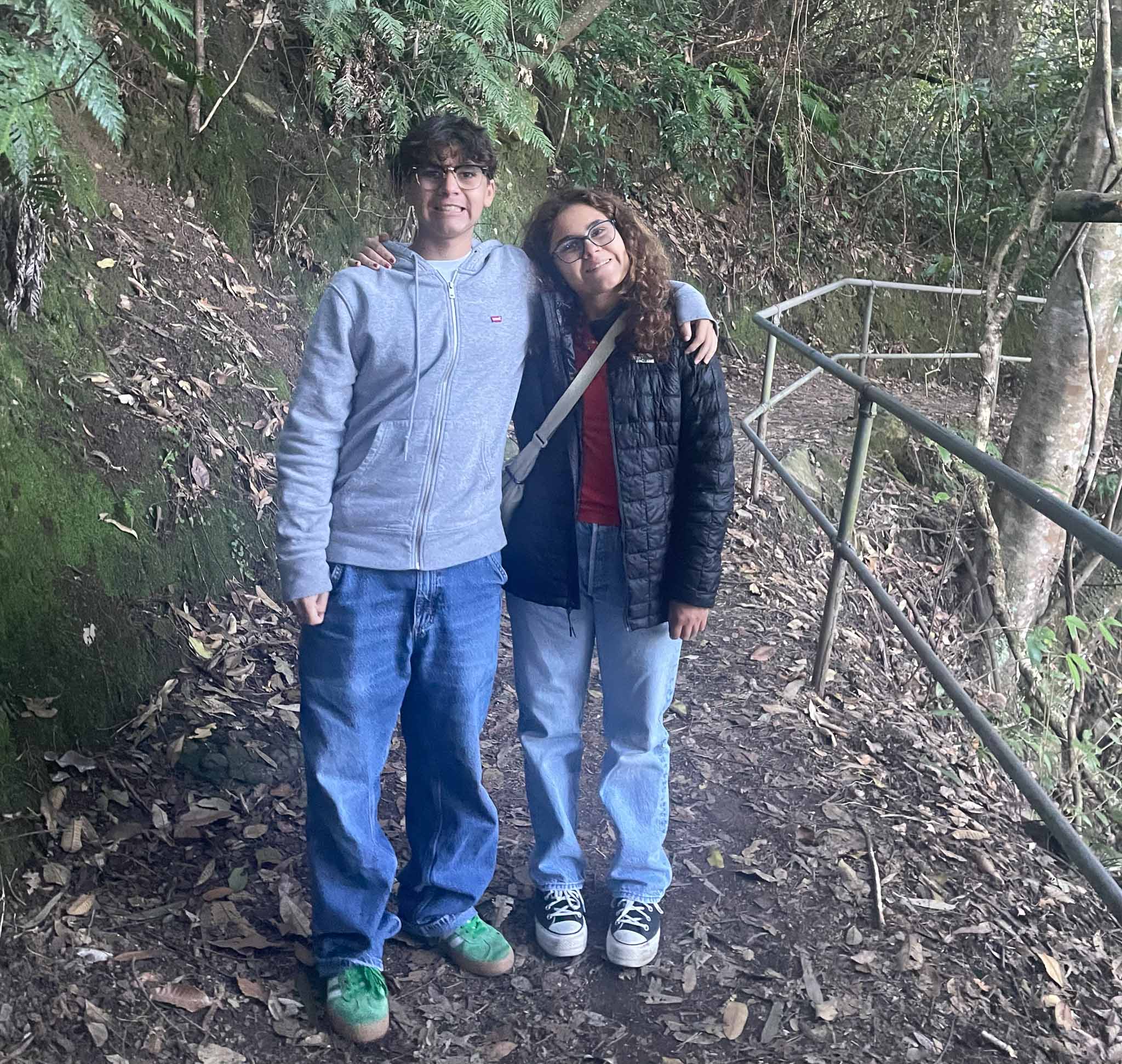
Amercio is with his sister, Olivia, with the Blue Mountains in Australia in the background.
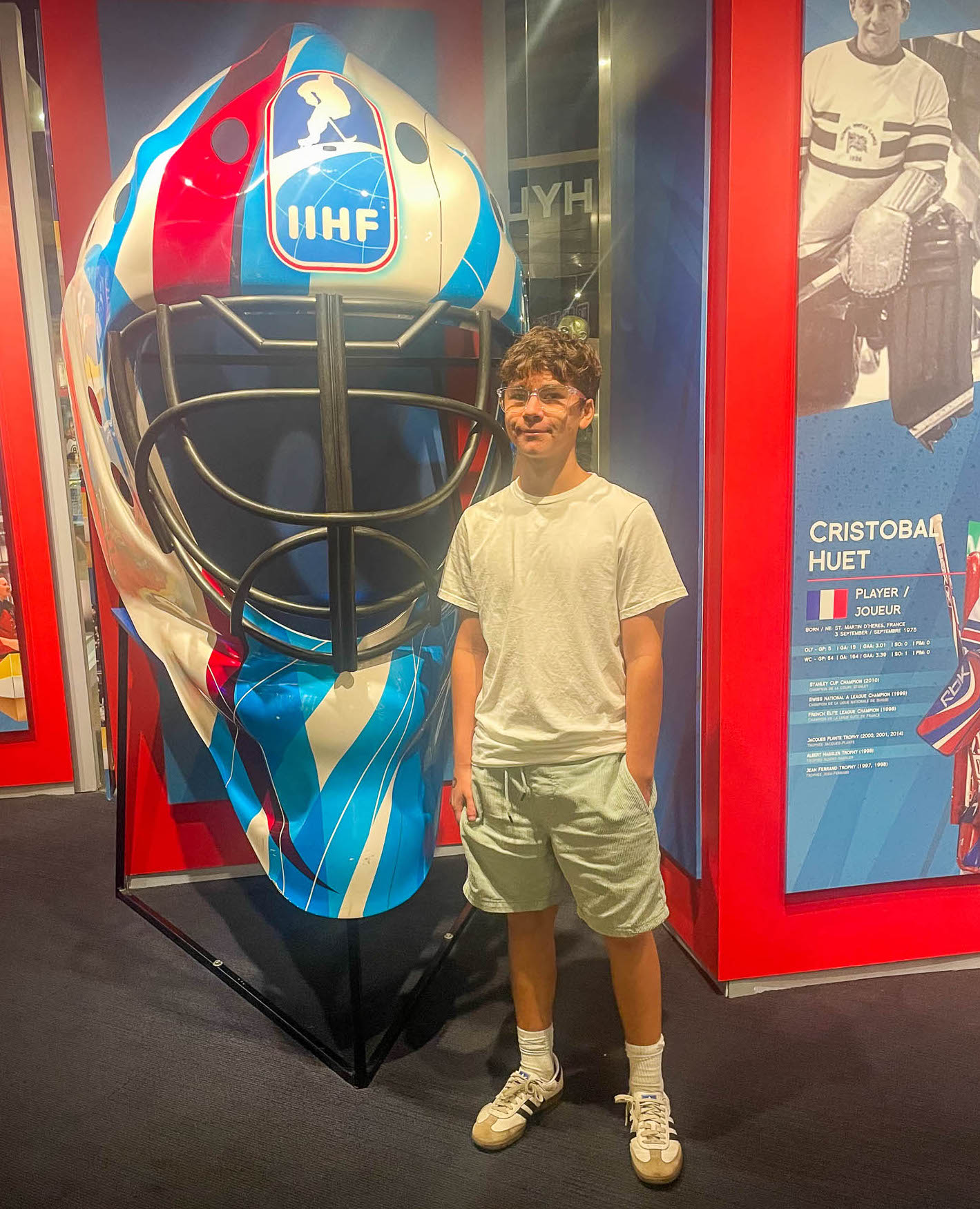
Americo at the NHL Hall of Fame standing in front of a giant hockey mask with the IIHF logo on it.
Finding My Voice
While my early years of living with Usher syndrome were defined by isolation, I have begun to meet others like me and this has led to finding my voice. Finding my voice didn’t erase those barriers, it just gave me a way to name them. Living with this condition is like navigating a maze in the dark with earplugs in, while everyone else walked through with the lights on and a map in hand. I would stumble into walls and miss turns no one else even noticed. And when I asked for help, people would say, ‘Just open your eyes,’ not realizing my darkness isn’t something I can switch off. That loneliness, however, has created a powerful direction. As my journey has progressed, I have become passionate about raising awareness for accessibility and equity in the educational system and also advocating for myself. I recently went to my first USH Connections Conference and had my portrait taken for the Usher Syndrome Society’s Shine a Light on Usher Syndrome campaign. As I look ahead, I know the path will be difficult, but as I wrote in a recent narrative of my visual struggles, I believe that: “With each step that I take, with each challenge I face, I will define the person I become.”
Explore more Blog posts
Finding My Way
blog Finding My Way by Olivia CastilloSeptember 30, 2025 Who am I? I am a 19 year old girl from Capitola, California and coming this fall, I will be a junior transfer at the University of California Los Angeles majoring in Linguistics. I’ve chosen this path with the...
The Winding Road to Diagnosis: My Usher Syndrome Story
blog The Winding Road to Diagnosis: My Usher Syndrome Storyby Samantha MurphySeptember 18, 2025 A Family History of Vision Loss My name is Samantha Murphy, and in January 2025, at age 52, I learned that I am going blind. I was diagnosed with Usher syndrome Type 2A,...
Motherhood, vision loss, and finding connection in unexpected places.
blog Motherhood, vision loss, and finding connection in unexpected places. by Meagan MooreSeptember 4, 2025 An Unforeseen Path There are mornings when simply getting out the door feels like an obstacle course with one child searching for a missing shoe, another in...
Help us find treatments and a cure.