blog
Connecting the Dots
by Nathan Stockton
July 8, 2026
I can still remember the color of the optometrist’s eyes, brown, shaded with concern, as she gave me the first answer in a trail of questions I never dared to ask. I was just there for a pair of glasses, I thought. I’d been struggling to see at night for years, and apparently my field of vision was a lot narrower than other people’s, but whatever was wrong with my vision was just a simple fix, right?
It wasn’t. It was the first dot in a picture that would take me thirty-four years to see.
The First Dot
I went because it was starting to get tougher to read paper books and see the subtitles on the TV. My wife, children, parents, friends, coworkers, bandmates, random strangers, and wet floor signs were practically begging me to go. Being hard of hearing, I adore subtitles and I read very fast because I love reading. I thought my vision could be fixed by a simple correction, like my hearing aids when I was a three-year-old kid. I still didn’t know why it took forever for my eyes to adjust to light, or why the glare of the sun blinded me more than it should, but I just wanted to read a normal book again.
I took the standard eye test and struggled to read the fourth line down, like usual. Then they turned the lights off, and I could only see the big letter on top, and the three under it. The doctor scribbled some notes, muttered to herself, and then asked me to do a different kind of test. First, she tested my eye pressure, blasting both eyes with a puff of air. It felt weird, but they were just fine. Then she had me stare into a screen so she could take a picture of my retinas. It kind of reminded me of a microscope, but when I looked into it, there was a green circle. The eye doctor asked me to keep staring at it while a laser scanned my eyes, one at a time.
The picture she showed me made my world crack and crumble around me. It made my future look scary and uncertain.
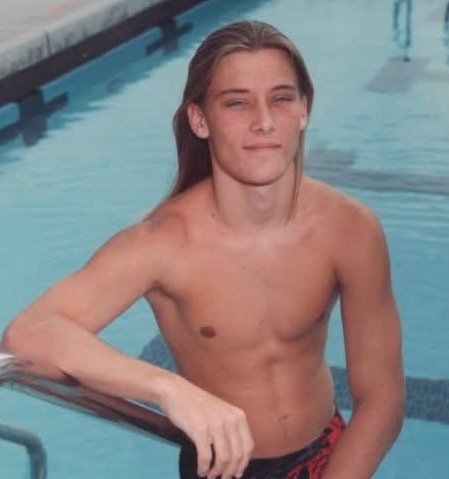
A young, long-haired Nathan Stockton is pictured poolside during his high school freshman swim team picture day in 1995, highlighting a lifelong passion for swimming that will culminate in his participation in the Usher Syndrome Society’s USH X Swim Alcatraz event in October 2026
The Full Picture
It was a picture of the inside of my eyes. She showed me a healthy one first—all clear and bright. Then she showed me mine. It was murky and dark, filled with floating debris. What I was seeing were the departed remains of my eyes’ cones and rods, the biological machinery that controls how much light touches the optic nerve.
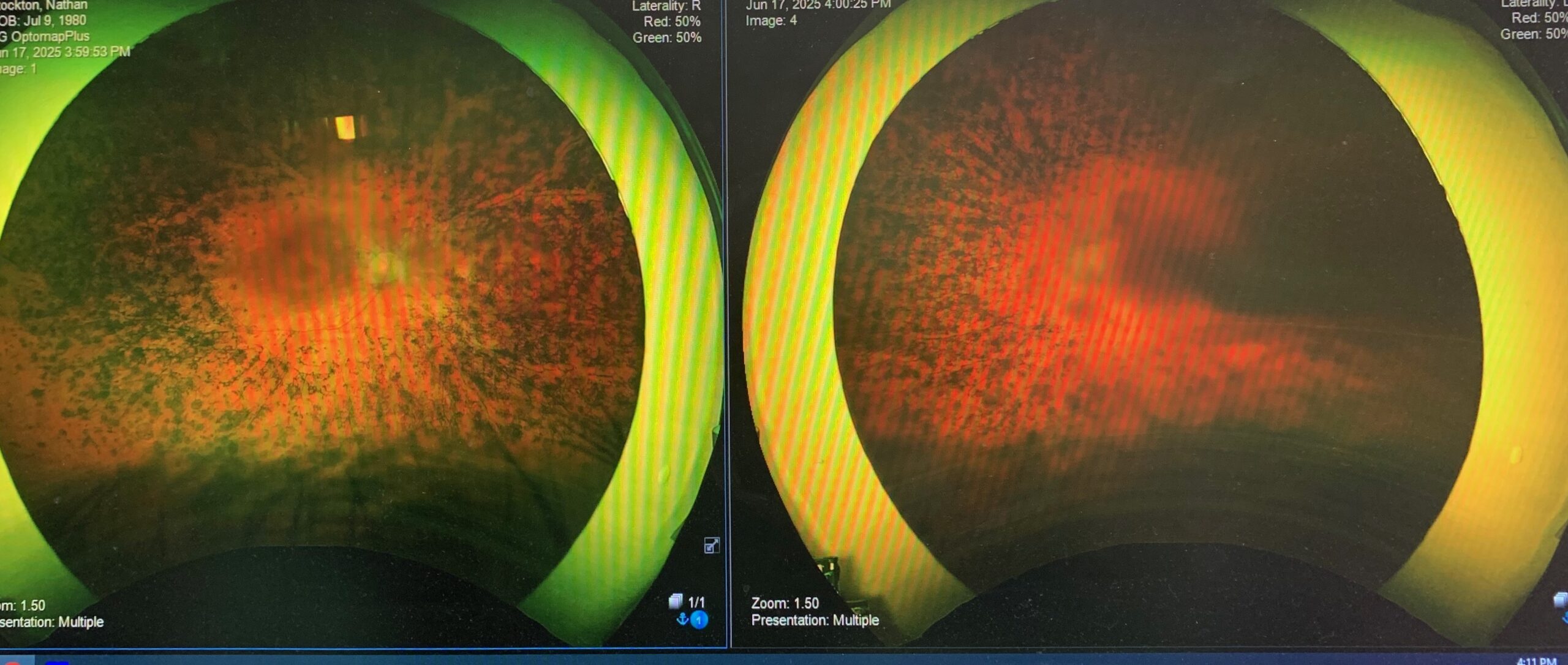
A photo of the inside of Nathan’s eyes taken at his most recent retinal specialist visit.
She recommended following up with a retinal specialist for an official diagnosis. I went, and they confirmed everything she said. They recommended getting a genetic test for Usher Syndrome because I had all the markers for it. They also had me do a peripheral vision test, where I stared into another machine with a clicker and had to press it every time I saw a point of light. Well, it took a long time to see any points of light in that test. When I saw a picture of the results afterward, the black cloud of the areas where I couldn’t see and the white line of “normal” vision were miles apart.
I have about 30 degrees of visibility left between my eyes. I am right on the cusp of being legally blind.
Looking Back
Now, looking back in time through the looking glass of experience, I can finally connect the dots. I didn’t know I had Usher Syndrome Type 2 until I was in my mid-30s. All this time, I only knew I had hearing loss. But there were signs all along; I just thought they were somehow my fault. I used to read late at night, and my parents warned me I was going to strain my eyes. Before I knew it, the night sky became total blackness, except for the moon and a few points of light I would occasionally see, which I eventually figured out weren’t stars at all, but our closest neighbors in the solar system, the planets.
Now I know where the stars have gone.
Now I know why, when I was camping as a Boy Scout, I could navigate forests and avoid bears by moonlight one year, and the next year, I could barely find my tent in the dark without a flashlight. Now I know why I was so bad at evening games in high school water polo. I was a pretty good player, too, playing for the varsity team from sophomore year on. But I missed a wide-open penalty shot once. I wondered how I could have missed it for years; I didn’t even come close to the goal or the goalie.
An 18-year-old Nathan Stockton poses proudly next to an American flag during his 1998 Eagle Scout ceremony, wearing his full uniform and merit badge sash, which includes the Wilderness Survival badge he uniquely earned by sleeping alone in the wild despite a nearby bear sighting
Blind Spots
Before transitioning to full-time remote work, I used to work in the field as a land surveyor, staking utilities and houses. I used to love doing boundaries, where we would go out into the wilderness to look for property corners. It was at this job that one of my coworkers first put the idea in my head that I might have tunnel vision, because I kept losing the stakes we had just placed. It wasn’t a one-time thing; it happened at least twenty times a day. I also hit my head quite a few times in the field. Once on the bucket of a backhoe I should have seen, and once on the corner of a fence when I bent over to pick up a pencil I dropped. I hit my forehead really hard that time, drawing blood and seeing stars. I angrily denied his diagnosis, of course, and waited a bit longer to get my eyes checked in stupid rebellion. But in hindsight, he nailed it. Of course he did. He only spent 8 hours a day, 5 days a week with me. What did he know?
Now I know why I’m extremely bad at handshakes and high-fives, and have been for as long as I’ve been giving them.
Where All the Dots Align
It was at a Target Optical center that I found out my eyes were slowly dying from the inside. I had already spent the first 34 years of my life as a hard-of-hearing person, and now I had to come to terms with a new reality: I was a person with low vision. Glasses would help with the sight I had left, but there wasn’t a magic replacement for the sight I had lost along the way. And it will slowly get worse, like it has silently been doing all along.
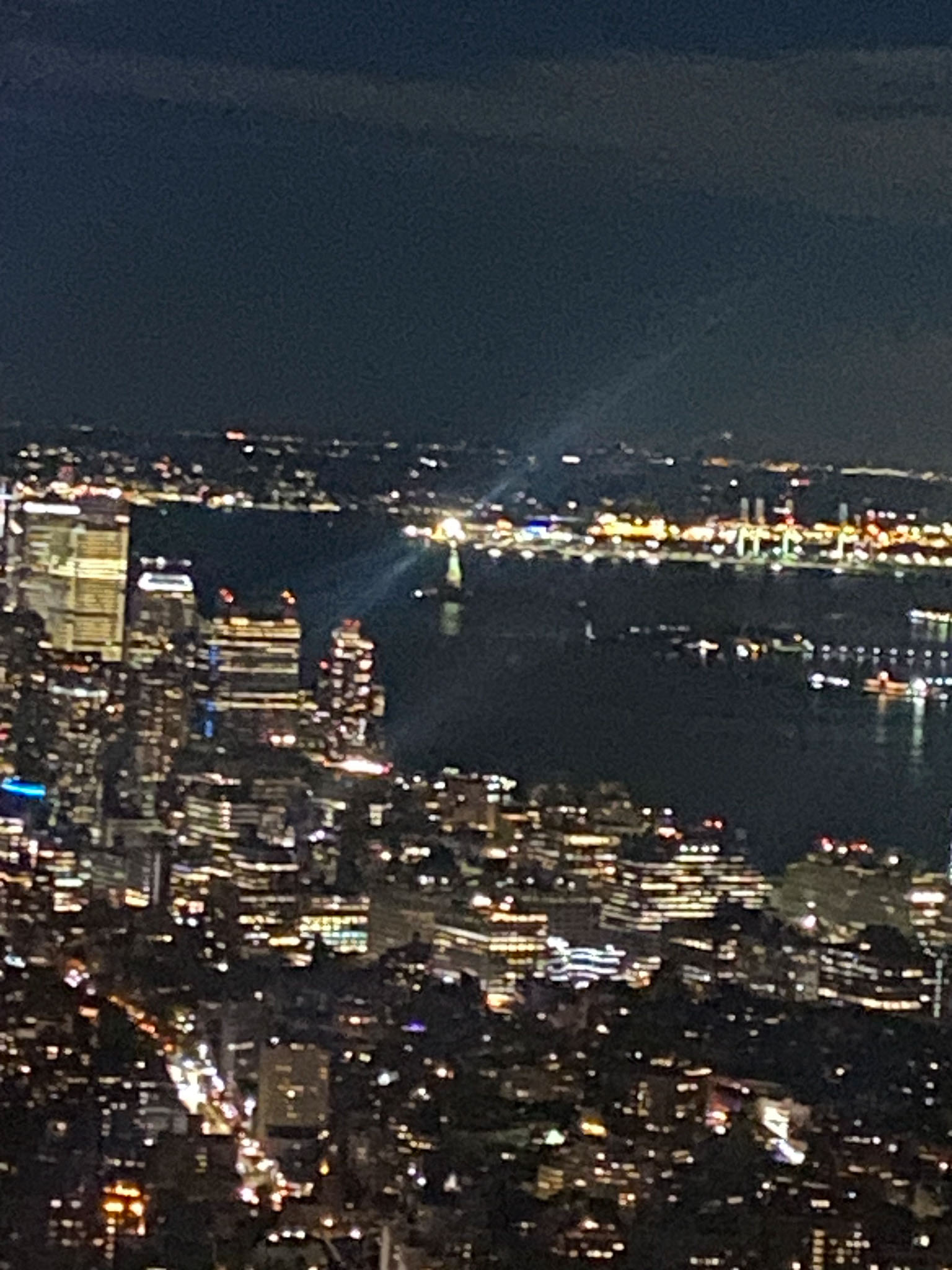
All I can do for now, until there is a cure, is enjoy the things I can still see and hear while I still can. I miss the stars of yesterday. I miss gazing at the night sky. I miss my old friend the North Star, and I can’t see constellations anymore. But today, I can tell the difference between Chicago, Los Angeles, or New York simply by the way the city buildings mark their place in the darkness.
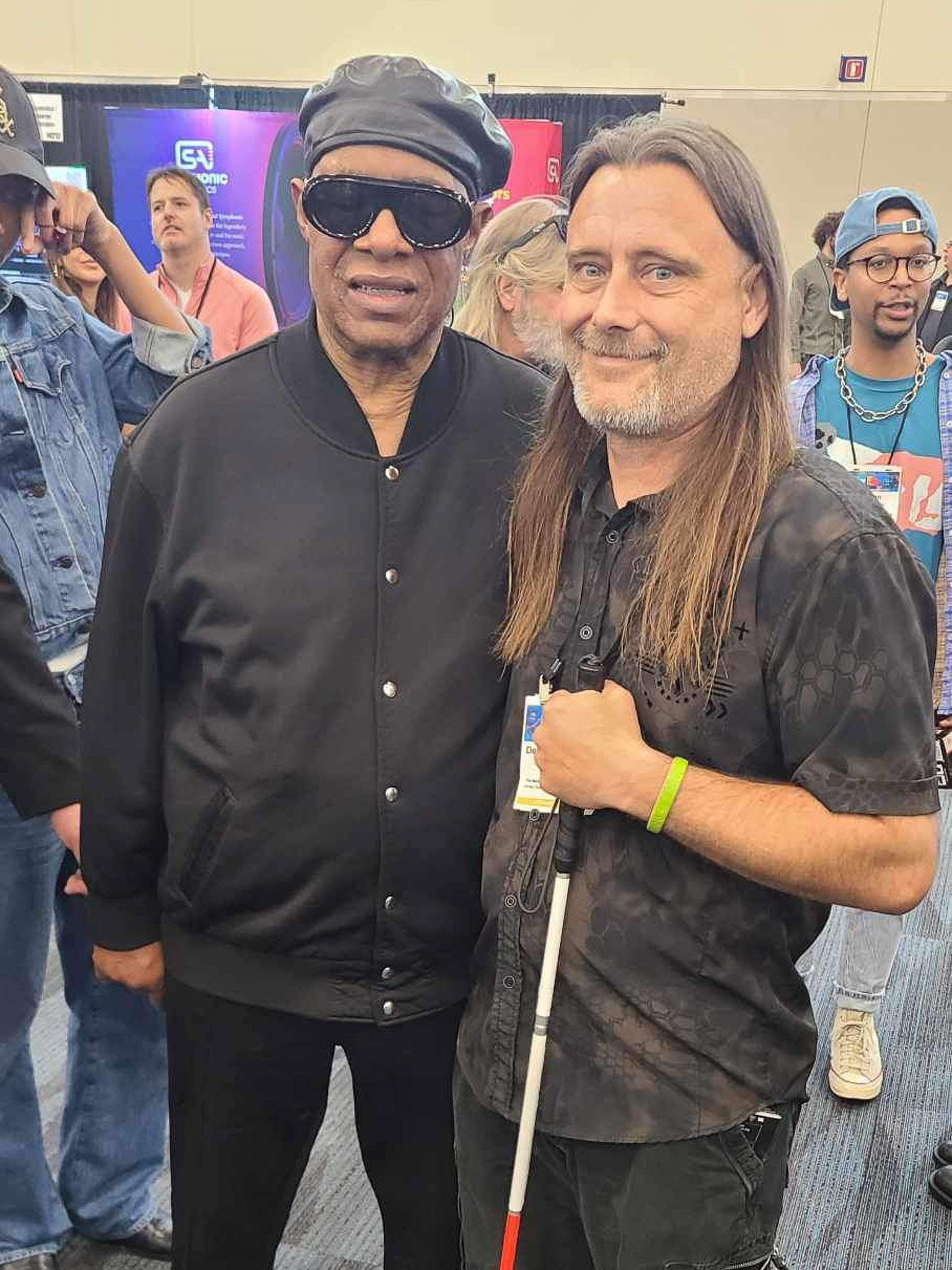
Maybe that darkness is why I love touring and playing music in The Mendenhall Experiment. We’re a band focused on disability representation, empowerment, and awareness. I get to play music in front of people. Even if I can’t see or hear half of them, I know they can see me, and they can definitely hear me. When I’m up on that stage, none of the limitations matter. I’m exactly where I’m supposed to be.

Explore more Blog posts
See Us Hear Us: An Immersive Gallery Fundraiser by Pam Aasen
blog See Us Hear Us: An Immersive Gallery Fundraiser by Pamela AasenJanuary 12, 2026 On Thursday, October 23, I had the privilege of attending the incredible ‘See Us Hear Us’ fundraising event at Artechouse NYC, a premier venue in Chelsea known for hosting...
Moving Forward by Americo Castillo
blog Moving Forward by Americo CastilloNovember 29, 2025 Every 4 to 17 per 100,000 people—approximately 400,000 people worldwide—live with Usher syndrome. As a 17-year-old junior at Soquel High School in Capitola, California, I am one of them. Like any other student,...
Celebrating My Grandsons on Usher Syndrome Awareness Day by Fran Hickmott
blog Celebrating My Grandsons on Usher Syndrome Awareness Day by Fran HickmottOctober 13, 2025 Every year when Usher Syndrome Awareness Day arrives, my mind turns to the journey of my grandsons, Ethan and Gavin. When Ethan was on the way 24 years ago, I pictured a...
Help us find treatments and a cure.