blog
Finding Usher Syndrome, Unintentionally
by Awais Nisar
April 30, 2026
THE PRESENT
Looking back now at the age of 26, the challenges of my childhood finally make sense with the clarity of an Usher syndrome diagnosis. I feel fortunate to have received this news before the physical symptoms of vision loss truly took hold, though the discovery itself was a life-altering shock. My path to this diagnosis was a confusing journey that began long before I sat in that ophthalmologist’s chair, struggling to process the news being shared with my parents.
I remember sitting on the exam chair feeling pretty much confused, not understanding why or how my vision loss was going to happen. I also felt skeptical about whether the diagnosis was true or just a false positive. Regardless, it took me several years to understand how Usher syndrome affects my vision and to accept the hard reality that I am going blind. While I appreciate my life now, I often find myself reflecting on the ease of my younger years. Lately, I’ve been missing the simple things: the ability to go out at night or work in low light, and that effortless sense of security that comes with seeing the full, wide-angle view of the world
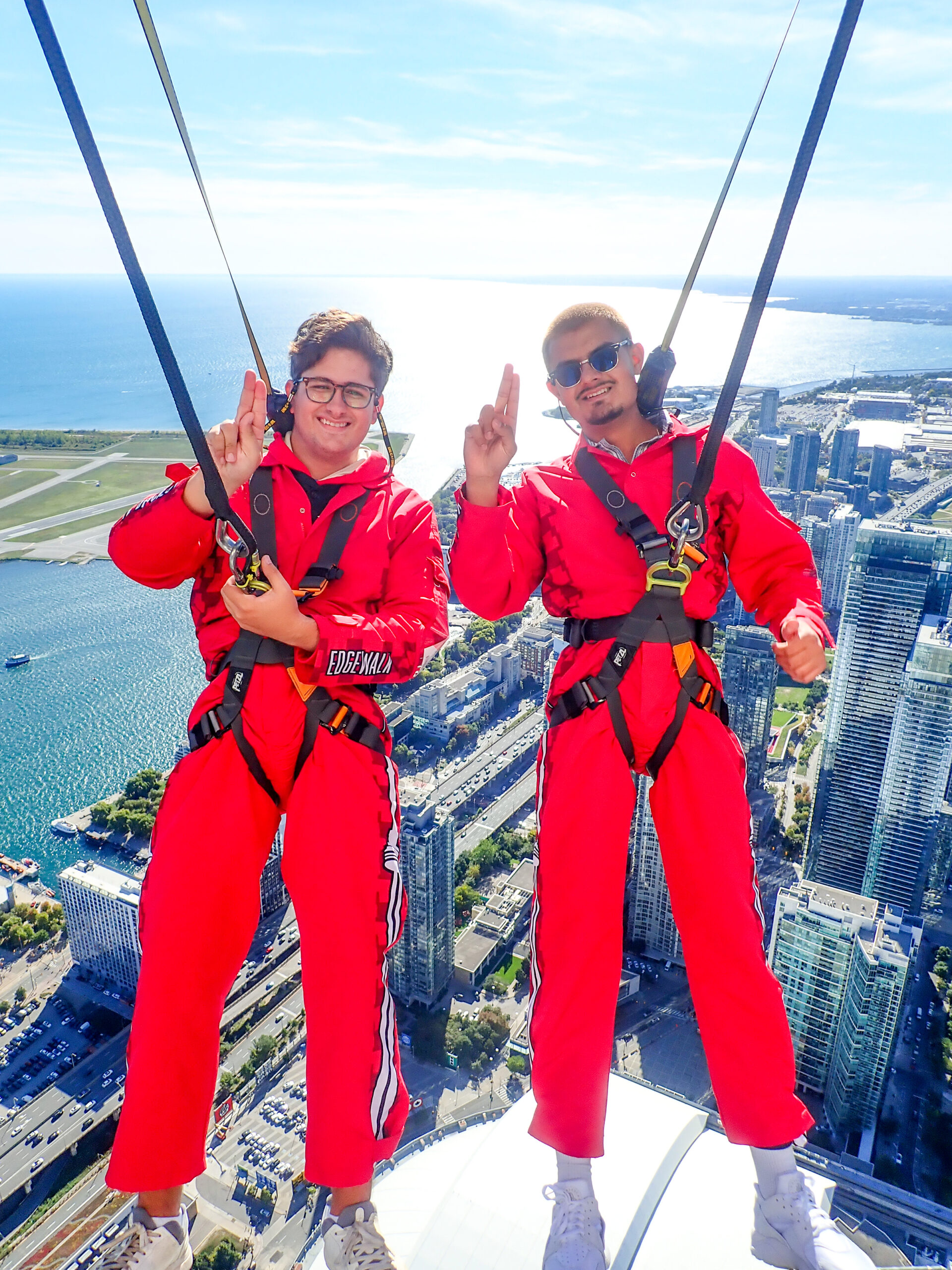
Awais & Ethan (Morrobel) during the Edge Walk at the CN Tower (2025). They are doing the ASL handshape of “U”.
THE PAST
Newborn hearing screenings did not exist at the hospital where I was born in Richmond Hill, Ontario, Canada; it didn’t start until 2002. However, when I was around 2-3 months old, my parent noticed that I was not startling to any of the loud sounds, so they brought me to see a nurse. Correspondingly, I was referred for a hearing test and then was later diagnosed with profound deafness in both ears. Immediately, I was fitted with hearing aids. Since I was not performing well with them on, the audiologist recommended that my parents consider a cochlear implant for me. My parents took the time to learn about it and meet other parents of children with cochlear implants and a year later, they decided to move forward with me getting the surgery at the age of 2.
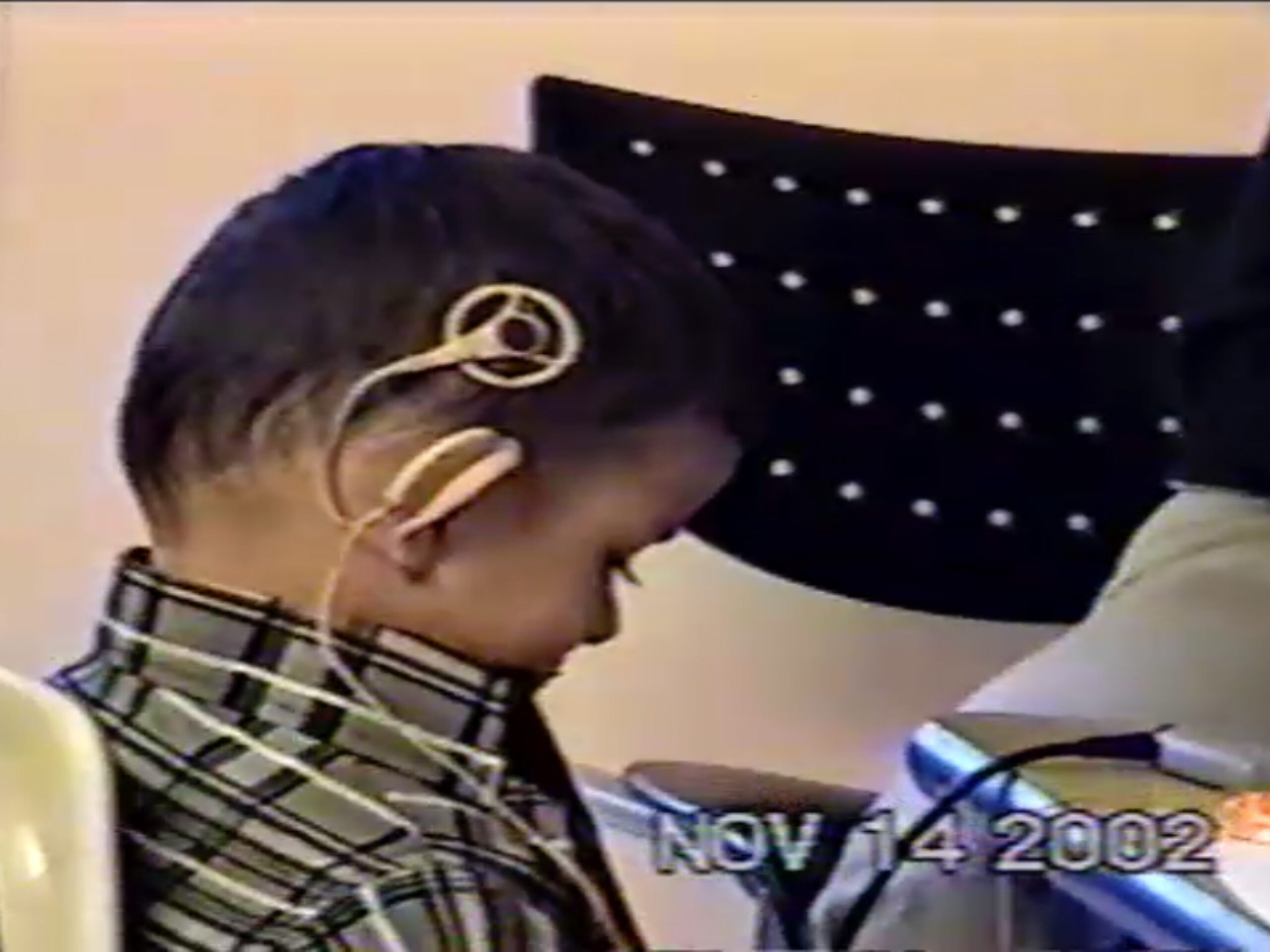
Awais listening to beeps through his right cochlear implant on activation day.
In the early 2000s, bilateral cochlear implantation was not a standard of practice in Ontario so for this reason, I was implanted on the right ear. I did not wear a hearing aid on the non-implanted side. With the cochlear implant, I went through intensive auditory verbal therapy for about five years so my speech and hearing could reach the same level as my peers. I was also exposed to American Sign Language as a toddler, but I was not allowed to sign after I received a cochlear implant to prevent delays in spoken language. I had discomfort with certain sounds a couple of times during kindergarten. It was challenging and my kindergarten teacher would notice sometimes that I was uncomfortable with my cochlear implant, so I would go to my audiologist so he could fix my MAPs. Perhaps if I had known ASL all along, I would have been able to express these issues myself.
CHILDHOOD
As a child, I never considered myself different from my peers because I was deaf. I enjoyed educating others about my deafness, cochlear implant, and FM system (a microphone for teachers to use to send their voices straight to a receiver attached to my cochlear implant processor). These tools were incredibly helpful for me to understand in class. In Grade 4, I participated in the Junior division speech competition at the school and discussed how my cochlear implant worked. I won a silver medal. I was always very confident, and it never occurred to me to question why I was born deaf.
It wasn’t being deaf that made me feel different; it was my balance. Over time, those issues became more noticeable. I had a hard time staying balanced and I was struggling with skateboarding, falling off easily. I realized that it could be related to my deafness, but I saw other deaf kids who were able to do just fine. I was confused at first but quickly brushed it off since I had seen my deaf brother riding a bike too. I tried riding the bike again and noticed a bit of improvement. While riding a bike was challenging, I learned to skate well and found it more enjoyable. However, I still couldn’t walk in a straight line or stand on one leg. This led me to undergo multiple tests to find a cause; however, none of the results explained my balance difficulties at the time. I was just a kid trying to keep up, not knowing that my body was already giving me clues about what was to come.
THE DECISION
I was intrigued by the idea of a second cochlear implant after many years of seeing other kids with two. Although I was doing well with my right ear, I was persistent because I knew a second implant would help me hear better in groups and noisy environments. My parents initially hesitated due to surgery risks, and some professionals felt I didn’t “need” it, but my audiologist supported me and added my name to the waiting list. During the routine candidacy evaluations, I showed no hearing response in my left ear, as expected, which made me an ideal candidate. However, my balance issues intrigued my surgeon; since previous genetic testing from my early childhood had been limited and inconclusive, she decided to run a more comprehensive genetic test to finally uncover the underlying cause of my deafness and balance difficulties.
Even though my balance issues did not affect my candidacy, my surgeon was interested in learning why I had issues with it. She decided to run additional tests on my balance, and I still didn’t do well on them. A day before the surgery, I saw an ophthalmologist for a thorough eye examination. I remember while having my visual field tested, my mom was chatting with the specialist about how excited she was for me to have the surgery and be able to hear from both cochlear implants. We were completely unbothered by all the checkups and tests behind the scenes.
After a successful surgery, I was relieved that it was finally over. I was recovering well and counting my days before activation. I was excited and nervous at the same time, sensing only positive energy. I was also starting sixth grade, which felt like the perfect time to finally use both ears for socializing and in-class learning. After the activation, however, I was disappointed and almost regretted my decision to get it. It sounded like high-pitched noise. Due to auditory deprivation in the left ear, I had to basically start from scratch and work harder to train my brain to listen on that side. I stayed faithful to the process and and kept wearing it; with time and continuous wear, the sound quality has improved.
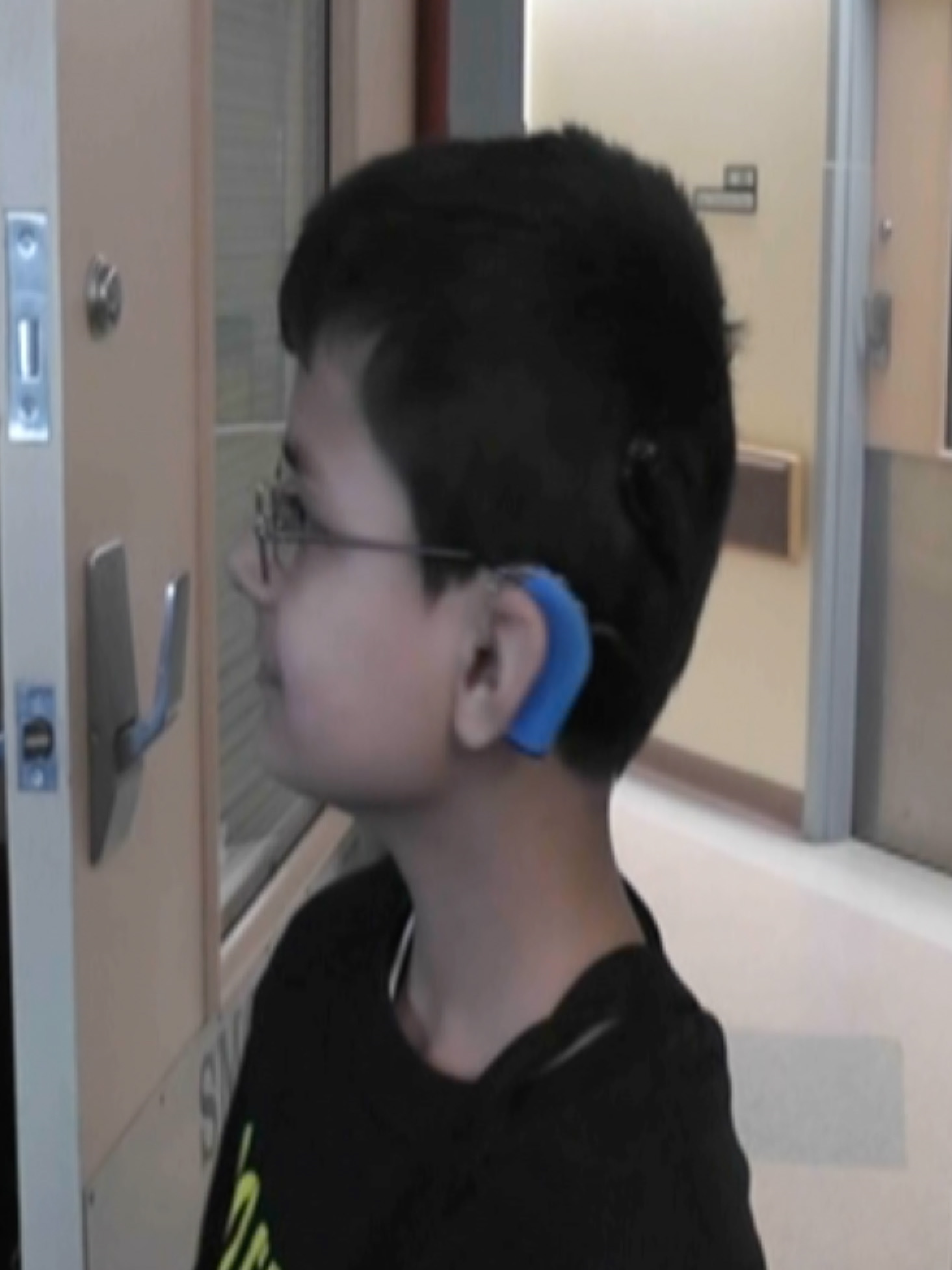
Awais showing his left side cochlear implant after activation.
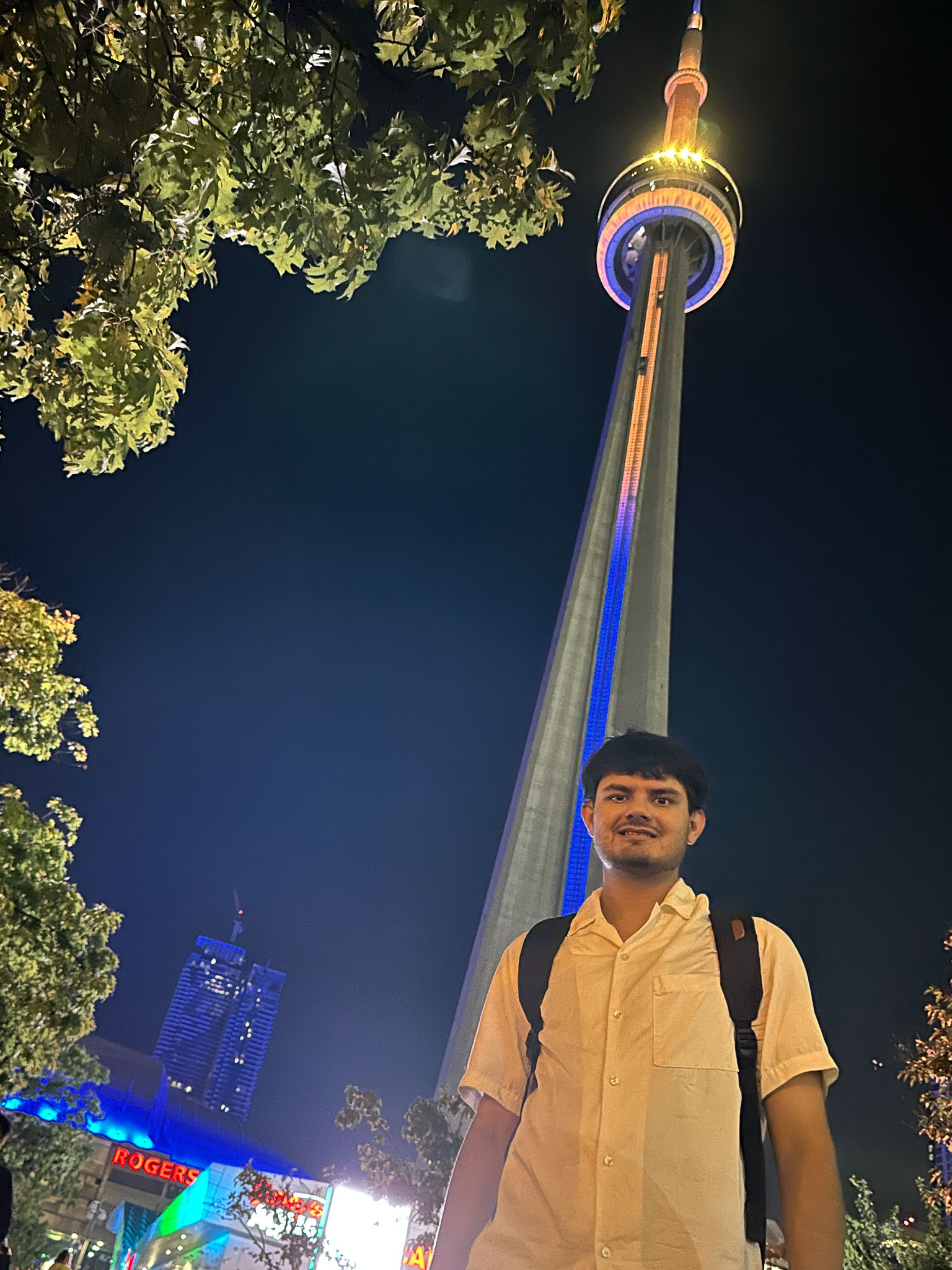
Awais standing in front of the CN Tower with blue and gold lights honoring Usher Syndrome Awareness Day 2025,
THE DIAGNOSIS
I was supposed to have another mapping a week later to ramp up the sound, but I also had an unexpected appointment with the vision center on the same day. My audiologist asked my parents about it and my parents responded that the surgeon referred me but had no clue why. My audiologist reassured us that it was likely because I wore glasses. I didn’t think anything of the eye appointment because I was focused on my new cochlear implants and was asking my audiologist questions about that. We were completely oblivious that this appointment was going to be a complete life-altering setback.
That day, when we walked into the ophthalmologist’s office for what we thought was a routine appointment, everything changed; the specialist shared findings that devastated me and my parents. The results of genetic testing showed that I, and my older brother, carry mutations in the USH1C gene, which causes Usher Syndrome Type 1C. This explained everything: why I was born deaf, why I had balance difficulties, and the hard reality that I would gradually lose my vision. The news was understandably overwhelming and unexpected. As a young child hearing this, I was completely confused. I had never heard of anyone who was both deaf and blind.
Later, I learned how my vision was going to be affected by this gene. It may sound like it is the end of everything, but it isn’t. Over time, I met supporters and individuals with Usher syndrome, and together they inspired me to advocate and raise awareness. I share my story now in the hope of helping to find treatments to prevent blindness. While finding Usher syndrome was unintentional, my journey forward is now one of purpose and strength.
Explore more Blog posts
One Year Later: Our Journey Through Fear, Community, and Hope by Michael Poalise
blog One Year Later: Our Journey Through Fear, Community, and Hope by Michael PoaliseFebruary 22, 2026 So many emotions run through my head every single day. Some mornings I wake up hoping this past year was just a bad dream. I want to go back to a time when I had no...
The Five Stages of Grief: A Journey with Usher Syndrome by Sarah Bailey
blog The Five Stages of Grief: A Journey with Usher Syndrome by Sarah BaileyFebruary 9, 2026 I had always heard that loss follows a five-stage process: Denial, Anger, Bargaining, Depression, and finally, Acceptance. I never imagined that I would step onto the hamster...
Starting My Journey by Matt Cameron
blog Starting My Journey by Matt CameronDecember 15, 2025 I'm currently 28 years old. I was born and raised in Newcastle, New South Wales (Australia), but I currently live in Sydney. I was diagnosed with Usher syndrome Type 2, which means I have the typical...
Help us find treatments and a cure.