blog
The Starting Line
by Sara Jessick
August 25, 2026
My First Usher Syndrome Conference
I stood near my apartment door, my carry-on suitcase full of clothes that I had carefully curated for several “first-impression moments” in my immediate future. And despite being told by friends and family that I was confident, capable, and well-prepared, I was actively attempting to control the nerves and anxiety quietly threading through my veins.
Was I truly ready for this?
To be surrounded by hundreds of others who, like me, have Usher syndrome, at varying stages? To be surrounded by their loved ones, researchers, scientists, advocates, and professionals who had dedicated enormous portions of their lives to this condition? It would be much easier to simply stay home. I was sure I could make the money back from my tickets.
I’d been formally diagnosed with Usher syndrome on September 1, 2020. As a result, I had battled through an acute period of grief, denial, and terribly low self-esteem at a time when the world already seemed to be falling apart due to COVID-19. And I had come out the other side. After years of rebuilding, I felt that I had finally reached a point of manageable groundedness, and a persistent yearning for connection and kinship, that meant I was ready to begin growing into who I was meant to become.
So no, I did not stay home.
Instead, I boarded a plane bound for Minneapolis, Minnesota, all for the purpose of attending the 2026 Usher Syndrome Coalition Conference for the first time.
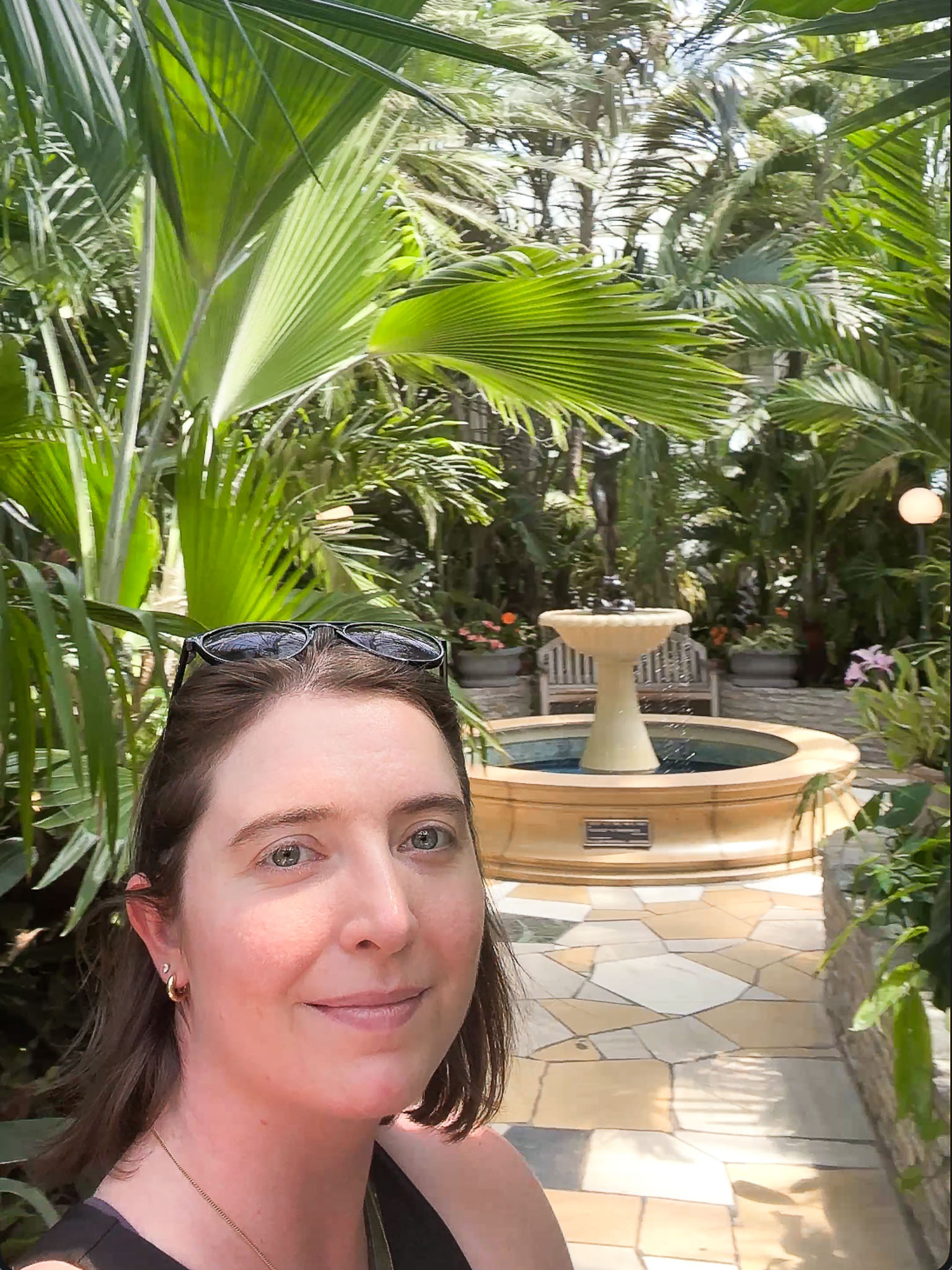
Sara at the fountain in the Minnesota Conservatory
Day One: Finding My People
I arrived in Minneapolis early to mentally stabilize and settle in, spending time with my little sister before everything began. Soon enough, Day One arrived.
After a morning visit to the conservatory, my sister dropped me off at the hotel for the conference’s first event: a Meet & Greet, followed by several optional sessions. Navigating through the venue, I checked in, received my tote bag, and explored the exhibit hall filled with resources, research companies, and advocacy organizations.
Eventually, the Meet & Greet began, with nearly everyone filing into one large room. As someone attending alone who didn’t know a soul, it was intimidating. I grabbed a drink and found a table. Around me, all within the same space, attendees communicated in spoken language, ASL, and ProTactile.
Stepping out of my comfort zone, I struck up conversations with researchers, advocates, and fellow attendees. Someone strongly suggested I attend an evening open discussion group for young adults. I hadn’t planned on staying, but I decided to trust the recommendation.
I’m so glad I did.
In that room, I connected with a group of people around my age living with Usher syndrome. We related to one another, shared our experiences and goals, and talked through common challenges. It was the first time I had ever spoken with a group of peers who truly understood my condition firsthand. There was no judgment. No confusion. No having to explain how my disability works or how it affects my daily life. When I shared my dream of becoming a public advocate and speaker, there was no doubt, just nodding heads, encouragement, and understanding.
It was one of the first times in a very long time that I felt simply understood.
Day Two: Real People, Real Research, Real Hope
Day Two began bright and early at 7 a.m. for a full day of presentations, stories, engagement, and laughter. Presentations on developing gene therapies quickly became some of my favorite parts of the entire conference.
I was captivated by the creative ways researchers were approaching these conditions. Science, I realized, isn’t a perfectly straight line toward a cure. It is experimentation. Obstacles. Creativity. Adaptation. Persistence.
Sitting there listening to all of it, something changed for me. These presentations made me feel as though I had a team of Avengers working 24/7 to create treatments for myself and thousands of others. The possibility that no one really cared that deeply was suddenly, blatantly impossible. I wasn’t scrolling past research announcements online or sitting in an optometrist’s office hearing general statistics. Instead, I had actual researchers standing in front of me, explaining their work in ways I could understand. For someone who had spent years carrying uncertainty about her future, seeing the people working behind that uncertainty was deeply impactful.
Later, I heard talks about navigating mental health. One idea particularly stayed with me: living with Usher means constantly challenging the assumption that we’re fragile. There were conversations about grief, advocacy, asking for help, and finding passions that anchor us. It wasn’t about pretending that Usher syndrome is easy. It was about learning how to live alongside it.
During the afternoon, I participated in the Usher Syndrome Society’s Shine a Light on Usher Syndrome exhibition. I had met the Society’s President and Founder, Nancy Corderman, before the conference, and it was Nancy who originally suggested that I attend and participate. As my portrait and video interview were taken, I was nervous and a little self-conscious. But Nancy and her team were enthusiastic, supportive, and beyond welcoming. I felt honored to take part in an exhibition that travels around the world. If my story happens to inspire someone one day, I would consider that a major privilege.
Toward the end of the day, I had the unforgettable experience of being introduced to Rebecca Alexander. I had been reading Rebecca’s book, Not Fade Away, and she had been a significant part of the reason I found hope when I was first diagnosed. And suddenly, there she was. Rebecca was hilarious, warm, and friendly, greeting me with an encompassing hug and patiently answering my questions. We talked about maintaining physical fitness while adapting to changes in vision and hearing, and I was pleasantly surprised that I even managed to make her laugh.
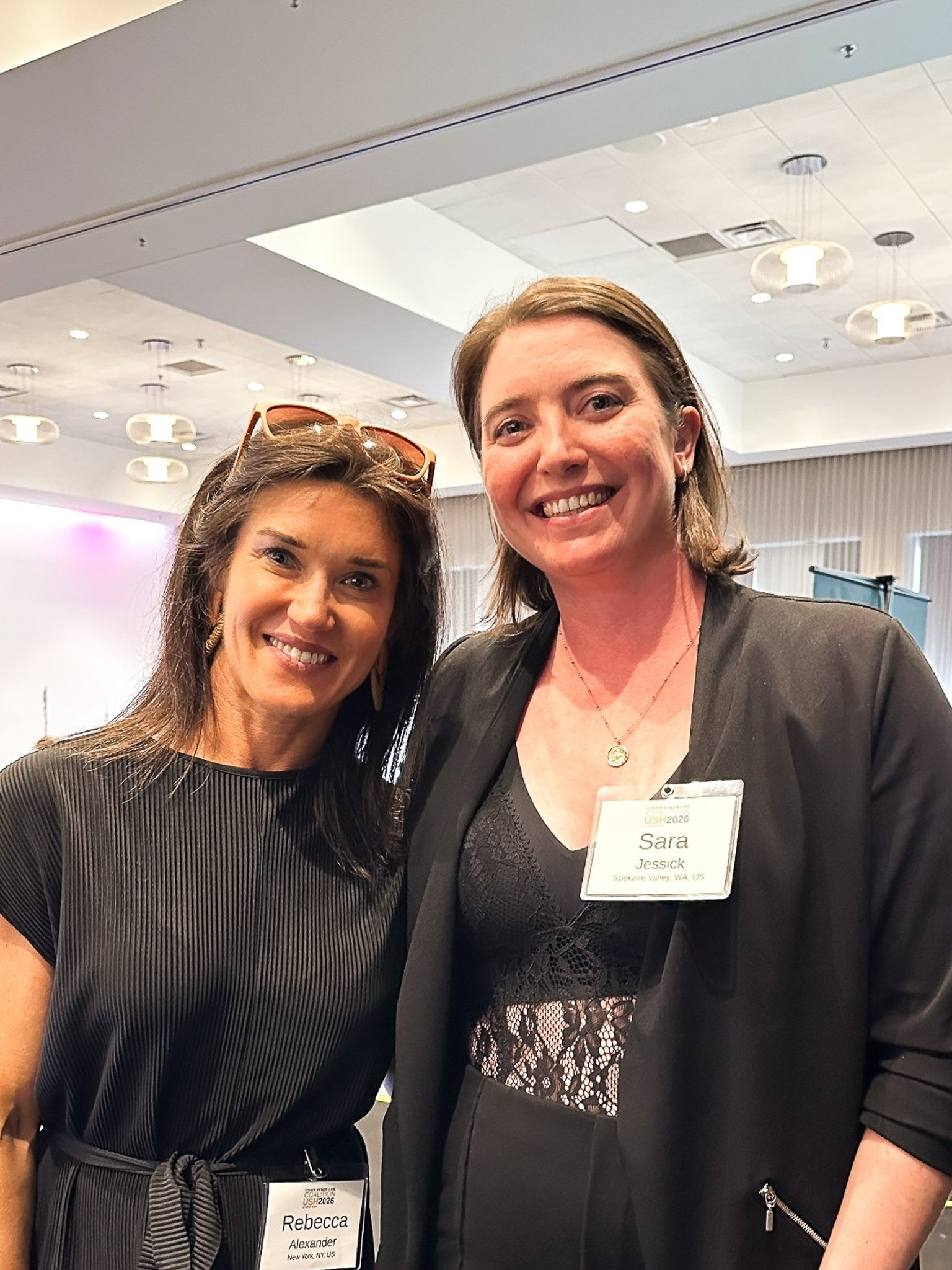
Sara meeting Rebecca Alexander in person.
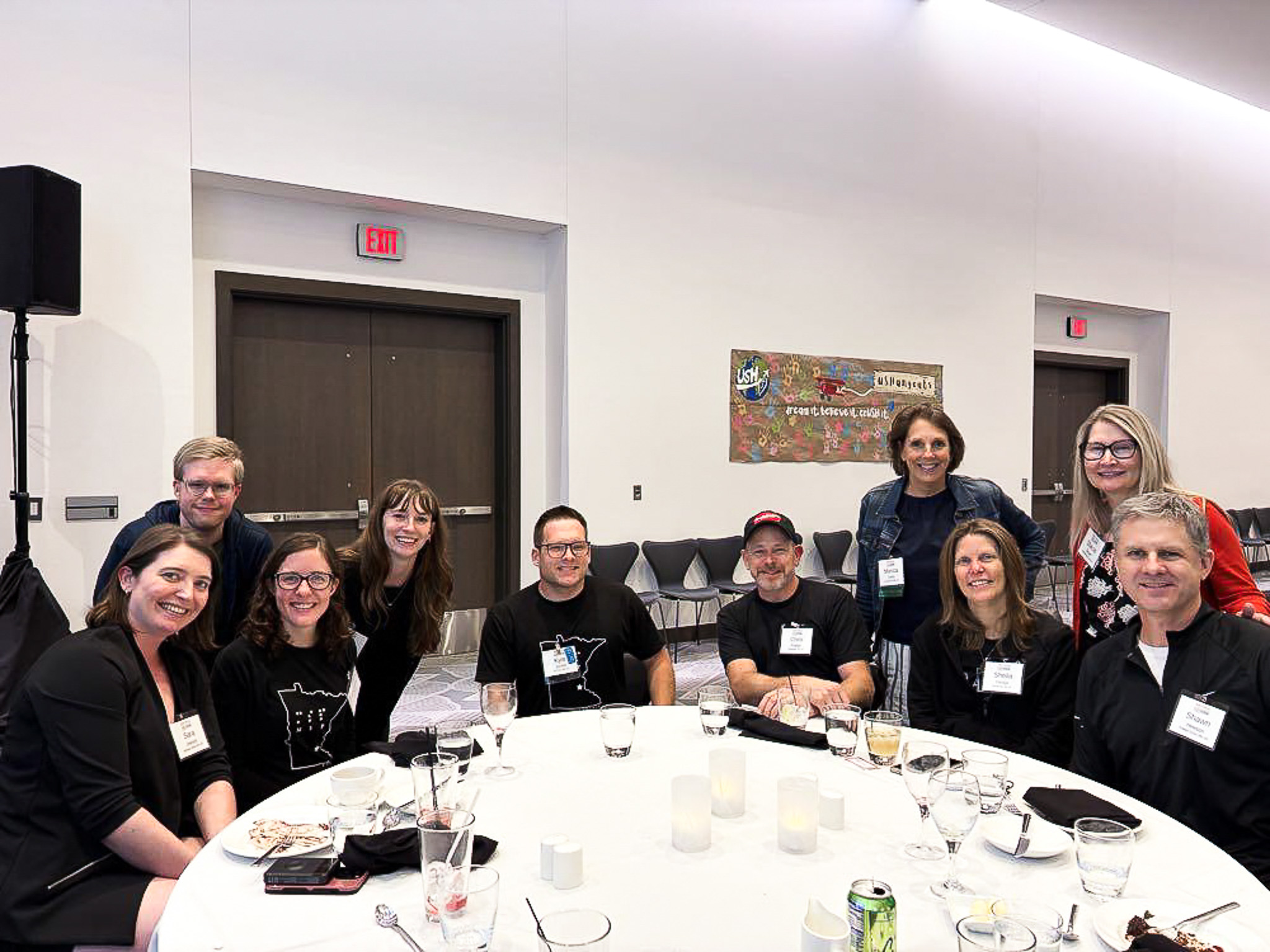
Sharing dinner with new friends at the end of Day 2
We closed the evening with a wonderful conference dinner. Introductions quickly morphed into hilarious stories about our experiences with Usher syndrome; misinterpreted words, hearing-device mishaps, and strange little moments that become funny when you’re surrounded by people who understand them. At one point, my left hearing-aid battery died, and another attendee immediately handed me a replacement.
It was a tiny moment. And somehow, it meant a lot.
Day Three: Looking Forward
Day Three came quickly and consisted of several breakout groups in the morning. I’d been curious about ProTactile for several years, so I decided to attend an introductory workshop. Inside, I had the chance to connect with several wonderful attendees and advocacy leaders before the session began.
The ProTactile workshop proved to be an eye-opening experience—despite the fact that I was, quite literally, blindfolded for it. With my sight temporarily removed, I was guided through three different stations designed to help us experience and understand a little of what ProTactile communication feels like and how it works. At one station, we learned how to introduce ourselves and familiarize ourselves with touch in the context of ProTactile communication. At another, we experienced a story told using descriptions communicated through touch and smell. And at the third, we explored objects and animals through touch, texture, and specific physical details—ears, tails, shapes, and surfaces.
As someone who is DeafBlind but currently still has most of her vision remaining, I found the workshop fascinating, helpful, and fun. It was also particularly cool to experience being surrounded by interpreters who relayed sensory, environmental, and backchannel information during conversations with ProTactile users.
I’ve spent much of my life adapting to the person I am today. That weekend reminded me that adaptation isn’t something that has to happen only after a loss. It can also be preparation. Curiosity. A way of meeting a future version of yourself before you actually need her.
And perhaps that was what the entire conference became for me. A starting line.
The Starting Line
As the conference came to an end, I felt overwhelmed, happy, and fulfilled. In just three days, I made a large group of new friends. I’d met researchers whose names had once existed only alongside scientific work. I’d learned more than I could possibly have expected. I’d shared stories, insight, laughter, fears, and pieces of myself with people who didn’t need an explanation first. I had walked into a room where I knew almost no one and somehow walked out feeling more connected, more equipped, more hopeful. And perhaps more importantly, more curious about who I might become next.
Standing in my apartment earlier that week, suitcase packed and anxiety threading through my veins, I thought I was simply deciding whether to attend a conference. Looking back, I think I was deciding whether I was ready to step out from the margins and fully embrace a community I’d spent years observing from a distance. I was deciding if I was ready to learn, to advocate, and to ask questions. Ready to prepare for changes without surrendering to them and to connect with others who understand the unique blend of grief, humor, fear, determination, and stubborn hope that comes with living with Usher syndrome.
And maybe that’s why “The Starting Line” feels more appropriate to me than calling this an ending or even a milestone. Because I didn’t leave Minneapolis feeling as though I’d figured everything out. I left realizing how much more there is to discover.
So, you tell me…should I have stayed home?
Explore more Blog posts
Parenting Through the Unknown by Jason Obermeier
blog Parenting Through the Unknown: A Father’s Journey to Purpose in the Usher Syndrome Community by Jason ObermeierMay 20, 2025 There’s a quiet moment every parent has when you imagine your child’s future. Tiny milestones. Big dreams. Their first day of school....
Discovering Strength After an Usher Syndrome Diagnosis by Audrey Chard
blog Discovering Strength After an Usher Syndrome Diagnosis by Audrey ChardApril 30, 2025 Facing the Diagnosis Twenty-one years ago, as a high school senior, I received the life-altering diagnosis of Usher syndrome Type 2. When I heard the word “blind” my body shut...

Every Second Counts: Accelerating a Cure for Usher Syndrome by Pam Aasen
blog Every Second Counts: Accelerating a Cure for Usher Syndrome by Pamela AasenAugust 15, 2024 The Usher Syndrome Society is incredibly creative and innovative in crafting fundraising campaigns and events that not only raise vital funds but also significantly...
Help us find treatments and a cure.