
blog
Beyond the Water: Swimming Alcatraz for the Next Generation
by Meredith Tyree
October 26, 2026
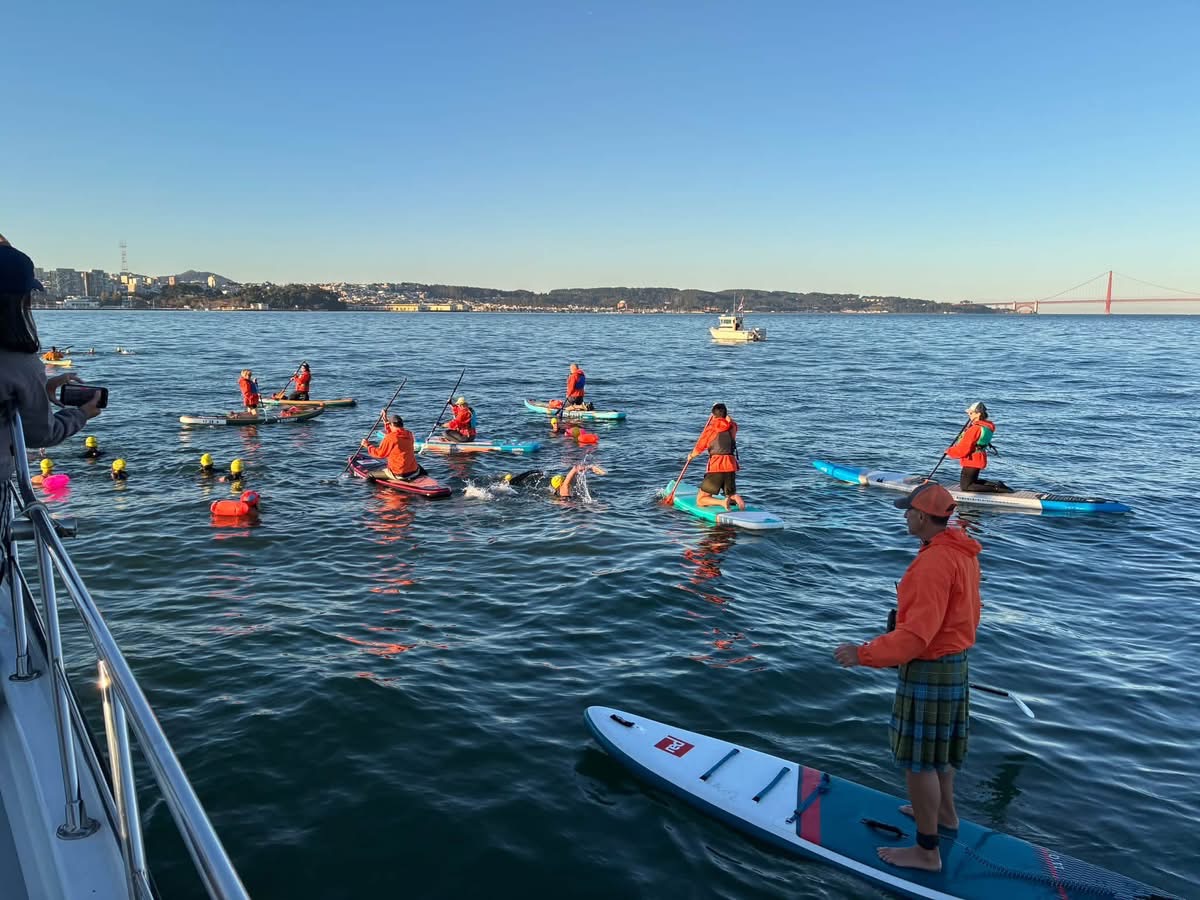
On October 17, 2026, I joined an extraordinary group of swimmers for USH X Swim Alcatraz, an event hosted by the Usher Syndrome Society to raise awareness and funds for Usher syndrome research.
At 61 years old, I thought I had trained enough. I had spent countless hours swimming laps at the Midlothian YMCA, preparing myself physically for the challenge ahead. But nothing could fully prepare me for the cold water temperatures or the powerful currents of the San Francisco Bay. The swim challenged me in ways I had not anticipated. It became less about my physical preparation and more about my mental strength.
I may not have swum the way I had expected or hoped, but this experience reached a place deep in my heart. I came away with something far more meaningful than meeting a personal swimming goal. It reminded me what it means to live with Usher syndrome, to adapt to changes we cannot always control, and to keep moving forward when life takes us in directions we never expected. And most importantly, it reminded me why we need to keep showing the next generation what is possible.
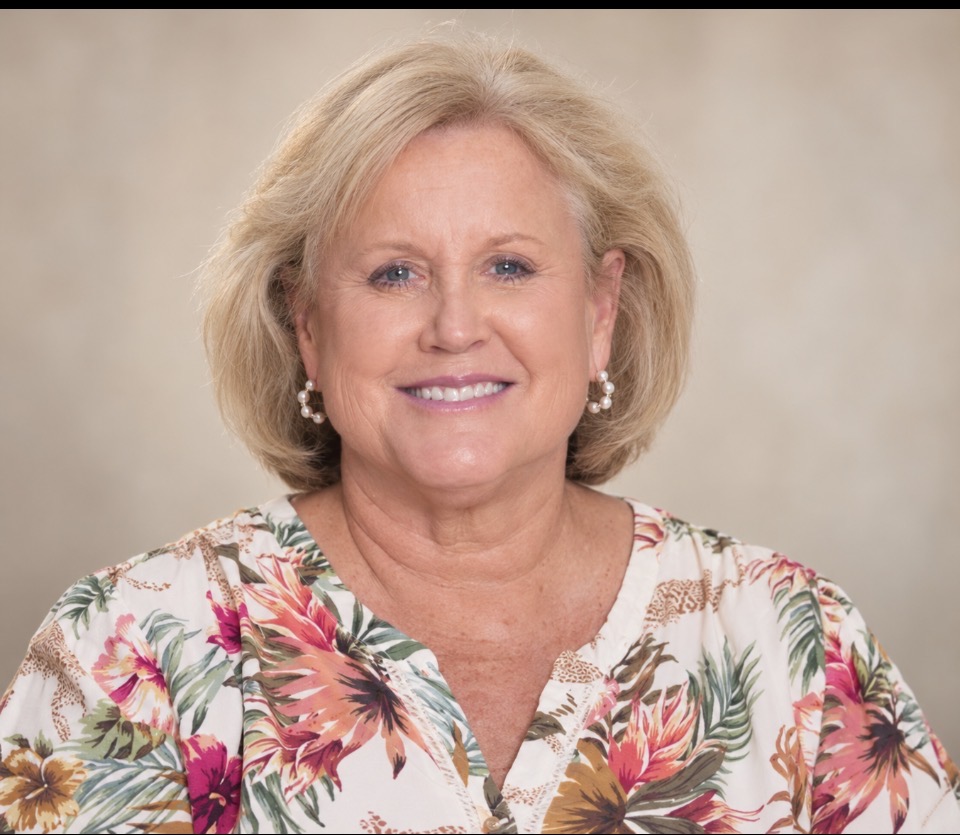
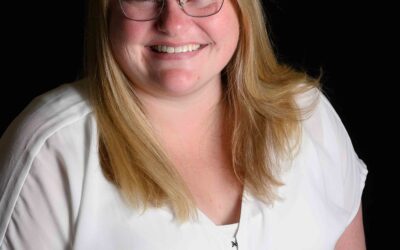
A picture of the author, Meredith Tyree
The Real Challenge Was Mental
Living with Usher syndrome type 2A means navigating a world where both hearing and vision are affected. I was diagnosed with severe hearing loss at six years old, and by 15, I was legally blind. Throughout my life, I have had to learn to adapt, adjust, and find new ways to do things as my vision has changed. Those adaptations are not always easy. They can be frustrating, exhausting, and emotional. Sometimes, just when you feel you have figured something out, another change requires you to begin again.
Out in the bay, facing the cold water and powerful currents, I experienced that same feeling of being pushed beyond what I thought I could handle. In many ways, the swim became a reflection of my journey with Usher syndrome. We can prepare for what we know, but we cannot always predict what lies ahead. I had to adjust, draw on a strength I did not know I had, and remind myself that success does not always look the way we expect it to.
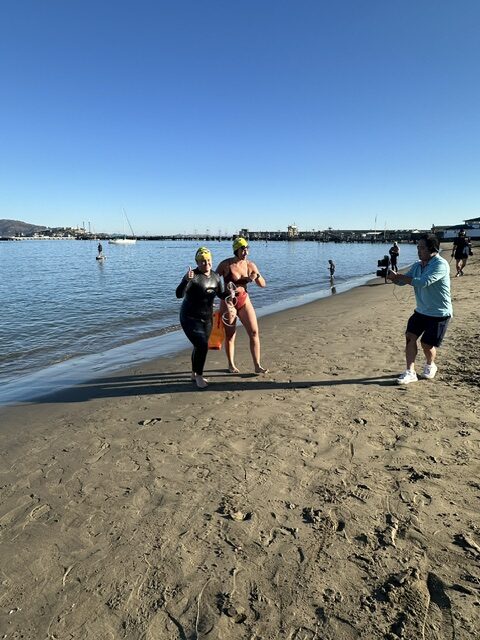
The author is back on land after completing the grueling swim.
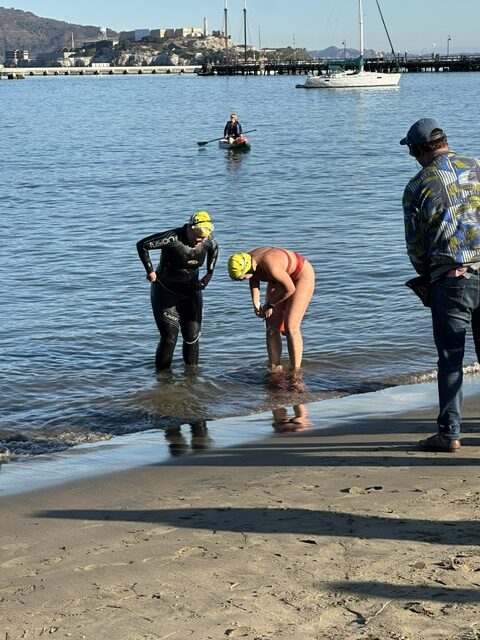
The author with her support swimmer, Kerri Borgese. She did not expect how the current made it so hard to get her balance and says that her footing felt unstable, much like life with USH
Growing Up in a Different Time
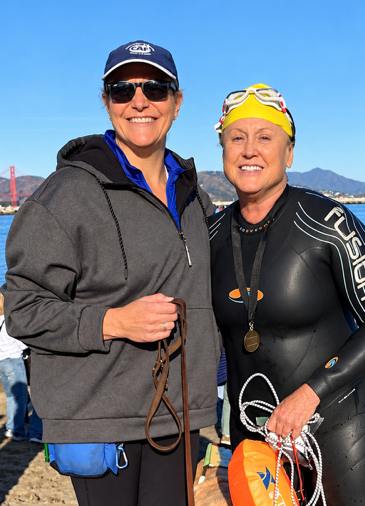
A picture of the author with her finish medal standing beside her friend Meredyth.
When I was growing up, the expectations for people with significant vision loss were very different from what they are today. Too often, the message was simply, “Go home and learn Braille.” There was little conversation about what else might be possible. What about college? A career? Independence? Relationships? Dreams and aspirations? What about being seen first as a person, rather than as a diagnosis or a disability?
For many of us, the battle was not just against the physical challenges of changing vision and hearing. It was an uphill fight against schools, societal expectations, employment barriers, and people who struggled to see our abilities beyond our disabilities. We had to fight to be included, to be understood, and simply to be given the opportunity to show what we could do.
The emotional challenges of those attitudes were often heavier than the physical loss. I know firsthand how critical it is to have someone who believes in you when the world only sees limitations. When I was young, I did not have access to role models and mentors living with Usher syndrome. I had to find my own way, often without knowing what the future might hold. That experience has stayed with me throughout my life.
The Role Models I Never Had
I first met Rebecca when she was in high school. To see the amazing role model she has become makes me incredibly proud. Through her advocacy, her willingness to share her personal journey, and her book, she has helped change the narrative around what life can look like for someone diagnosed with Usher syndrome. Her work has opened conversations and possibilities that were far less visible when I was growing up, showing people that a diagnosis does not erase a person’s dreams, ambitions, or potential.
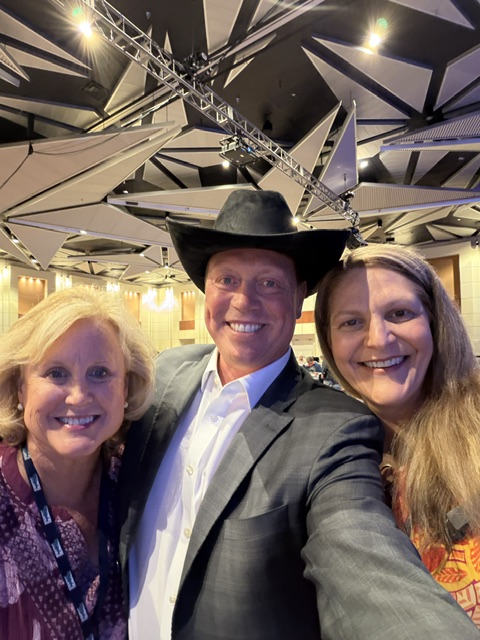
The author at the FFB Vision Conference with friends Jason and Meredyth (M1) who the author describes as her RP sister.
I often think about how different my younger years might have felt if I had been able to see people like Rebecca living full, active lives while navigating Usher syndrome. Representation matters. Stories matter. And having someone who understands your journey can make all the difference in how you see your own future.
That is why being with the young adults at USH X Swim Alcatraz touched me so deeply.
I listened as they talked about their college choices, their dreams, and their aspirations. These young adults were not waiting for life to become easier before pursuing their goals—they were thriving, exploring opportunities, and imagining bold futures. Seeing them reminded me how far our community has come. And in that moment, standing on the shore among them, I felt as though I had finally put my feet on the sand.
Their stories gave me immense hope, but they also reinforced that our mission must reach beyond the lab. We need continued medical research, but we equally need mentors, advocates, supportive communities, accessible education, and opportunities for people with Usher syndrome to thrive. I cannot change the experiences of my younger self, but I can help make sure the next generation knows that while Usher syndrome is part of their story, it does not define the limits of their future.
What I Hope a Newly Diagnosed Child Will See
More than anything, I hope this event reaches a child who has just been diagnosed with Usher syndrome. I hope that child and their family will see people living with Usher syndrome challenging themselves, pursuing their dreams, attending college, building careers, forming friendships, and discovering joy. I hope they hear a different message from the one many of us heard growing up: not simply about what they might lose or what they must do differently, but what they can still experience, accomplish, and become.
There will be challenges, difficult days, and moments when the future feels uncertain. A diagnosis does not tell the whole story. The path may look different from what they imagined, but they do not have to navigate it alone.
Imagine a newly diagnosed child seeing these swimmers and thinking, “Maybe I can do that, too.”
Imagine a parent feeling a little less afraid about their child’s future.
Imagine a young adult realizing that their dreams are worth pursuing because they have seen someone else do it.
If one child or parent sees our story and begins to believe in possibilities they had not considered before, then this swim has accomplished something extraordinary.
Making Waves Beyond the Water
Every contribution helps support research and brings hope to individuals and families affected by this condition. We need continued scientific progress, better treatments, and, one day, a cure. I am incredibly grateful to the Usher Syndrome Society, Nancy, all the support swimmers, the organizers, families, and volunteers who made this event possible. I am especially grateful for the young adults who shared their journeys and aspirations with me. They gave this swim a meaning that goes far beyond the miles covered in the water.
At 61, I am still learning, still adapting, still challenging myself, and still finding new reasons to be hopeful. The cold water and currents tested me physically and mentally, but the people I met reminded me why I was there. We may not be able to control every change that Usher syndrome brings into our lives, but together, we can help shape a future where no one has to face those changes alone. The swim was one part of the journey. The real victory was seeing a future filled with possibility.
And that is a mission worth swimming for.
With gratitude, hope, and love for our Usher syndrome community,
Explore more Blog posts
Life with Usher Syndrome: Finding Purpose Through Connection and Advocacy by Laurie McBride
blog Life with Usher Syndrome: Finding Purpose Through Connection and Advocacyby Laurie McBrideAugust 25, 2025 Living with Usher syndrome has been quite a journey for me marked by evolving challenges, resilience, and self-discovery. It was a journey that started long...
Parenting Through the Unknown by Jason Obermeier
blogParenting Through the Unknown: A Father’s Journey to Purpose in the Usher Syndrome Communityby Jason ObermeierMay 20, 2025 There’s a quiet moment every parent has when you imagine your child’s future. Tiny milestones. Big dreams. Their first day of school....
Discovering Strength After an Usher Syndrome Diagnosis by Audrey Chard
blogDiscovering Strength After an Usher Syndrome Diagnosisby Audrey ChardApril 30, 2025 Facing the Diagnosis Twenty-one years ago, as a high school senior, I received the life-altering diagnosis of Usher syndrome Type 2. When I heard the word “blind” my body shut...
Help us find treatments and a cure.