blog
Swimming for a Cure: Support USH X Swim Alcatraz 2026
by Pam Aasen
September 17, 2026
In 2009, when Ethan was seven and Gavin was five, our family received the Usher syndrome type 1b diagnosis that completely rewrote our lives.
We already knew our sons had been born with profound sensorineural hearing loss; by then they both had cochlear implants. Honestly, at the time we thought we had everything under control. We had navigated the surgeries, programming, auditory-verbal therapy, and early intervention services. They were thriving, communicating, adapting, and engaging with the world with incredible energy, so we felt confident we were on the right path.
The Usher syndrome diagnosis changed everything. It finally gave a name and explanation to the balance difficulties they had struggled with since infancy: not clumsiness or delayed motor milestones, but absent vestibular function. It also carried an even heavier truth, progressive vision loss from retinitis pigmentosa, which would gradually narrow their peripheral vision and could ultimately lead to blindness. In those early weeks, gripped by the shock of what lay ahead, our instinctive reaction was to ask for help. We immediately began fundraising for research, driven by the desperate hope that science could move fast enough to halt what was coming.
This is actually a good opportunity to take a heartfelt moment to recognize and thank all of our incredible family, friends, and supporters who generously donated back in 2010 through Fighting Blindness Canada. At the time, those funds contributed to broad retinal research rather than directly targeting Usher syndrome type 1b. But science builds upon itself and today, every single effort and contribution from our community has paved the way to this very moment.
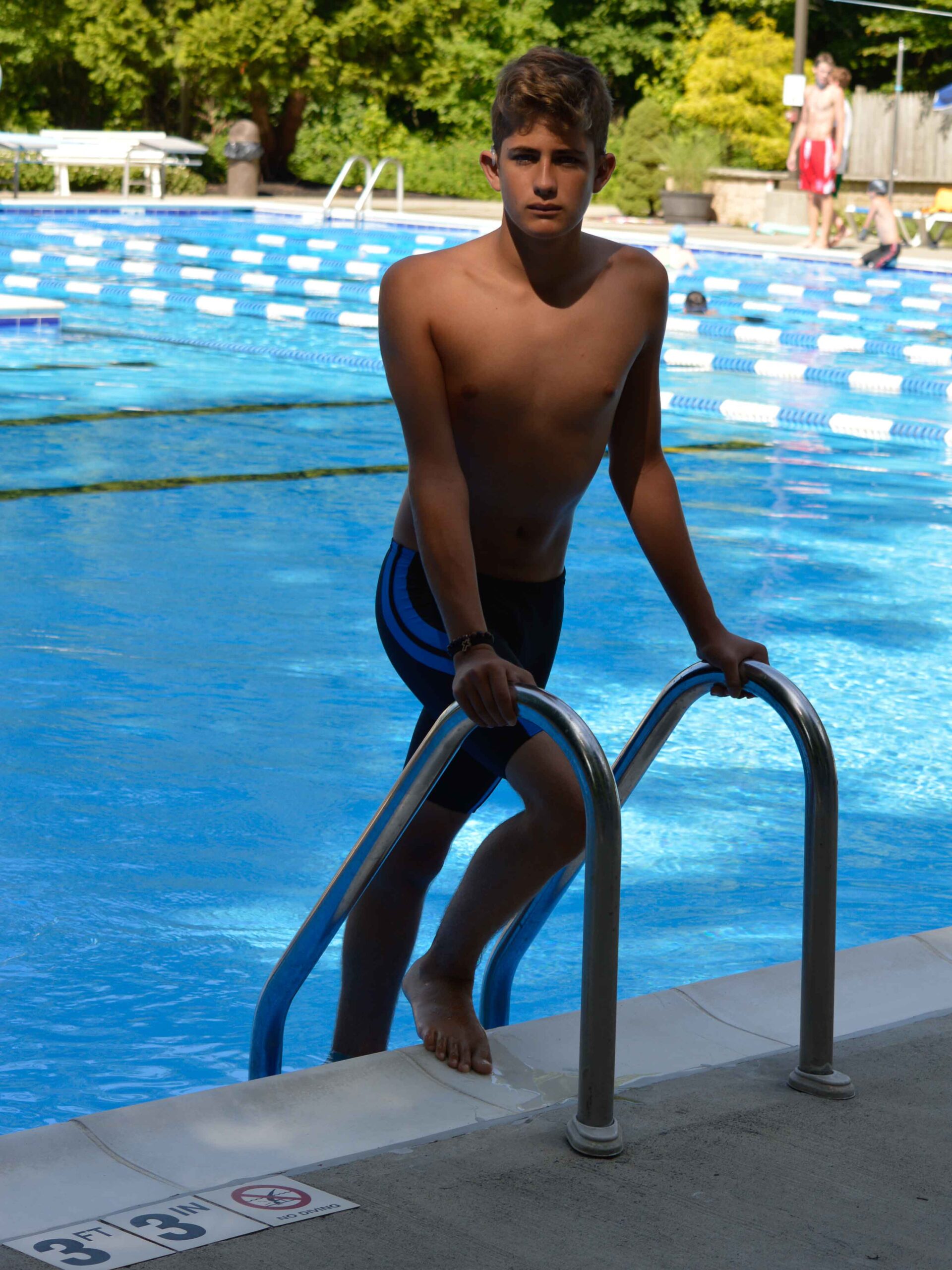
Ethan's individual picture for the Highland Pool Club Summer Swim Team in 2017
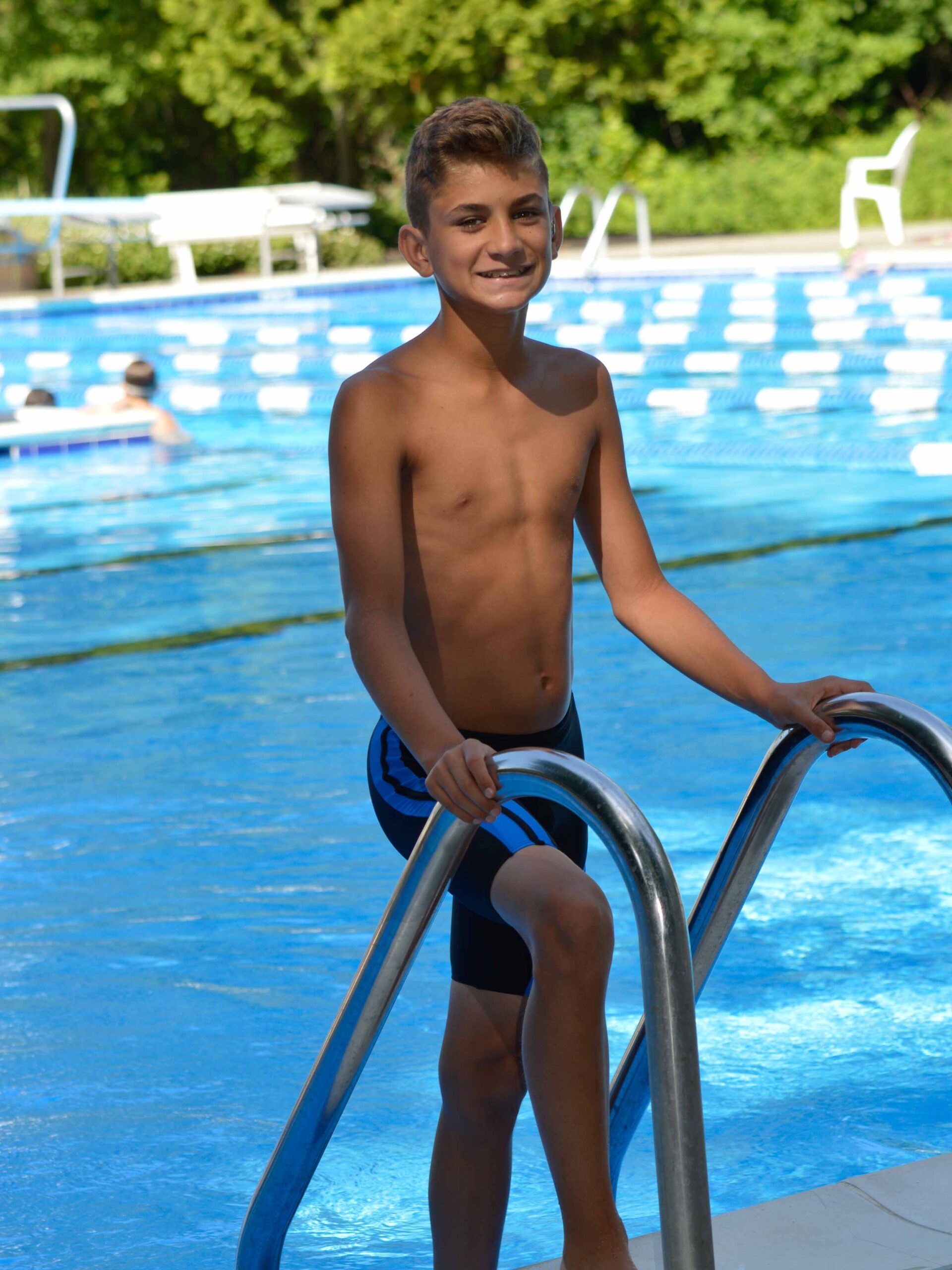
Gavin's individual picture for the Highland Pool Club Summer Swim Team in 2017
Over a decade ago, Usher syndrome research was agonizingly slow. Early clinical trials had run into major roadblocks and were eventually discontinued. As I understood it, the scientific tools simply were not ready, and the path forward was stalled by immense biological hurdles. My husband, Carlito, and I quickly realized that while science would take time, our sons were growing up right in front of us. They did not know then that I was quietly raising money in the background. What they knew, and what they needed, was a family fully committed to helping them build strong, meaningful lives in the present: developing their confidence, strengthening their voices, learning to advocate for themselves, and growing into leaders prepared to navigate a world that is not always kind or accessible to people with disabilities. So, we pivoted, choosing to focus on the daily work of equipping them not only to adapt, but to lead with confidence, speak up, and help shape the world around them.
Building Resilience
Since their diagnosis, we have done what we can to find and provide the opportunities that would build the advocacy skills and resilience they would need for the rest of their lives.
Rather than just participating, they found meaningful ways to contribute and serve as leaders. From an early age in Canada, they stepped up to give speeches and present at fundraisers, conferences, schools, universities, and community events. Since moving to the United States, Ethan and Gavin have served as Advocacy Ambassadors for Ava’s Voice, later becoming USHmentors after helping launch the very first USHthis Camp in 2019 in the US and later being part of the first camps in the UK and Australia. Whether sharing their lived experiences through the Usher Syndrome Society’s Sense Stories and SPAN’s Amplify Advocacy video series, being mentors for the SPAN Parent Advocacy Networks’s Deaf Mentor Program, publishing articles, or leading youth initiatives, they have welcomed opportunities to step into leadership roles, hoping their achievements might serve as an encouraging example for others walking a similar path.
That same dedication carried directly into athletics. Because of their absent vestibular function, developing balance wasn’t simple; it took years of dedicated physical therapy, personal training, and countless hours in the gym to build the core strength their bodies needed. Over the years, they threw themselves into a variety of sports, but the water always remained a comfortable element. They went on to become varsity high school swimmers, capturing national para-swimming championships at the 2019 Adaptive Sports Junior Nationals and 2019 Paralympic Championships as well as All-American para-swimming honors. Having spent so much of their lives training in the pool, they are genuinely excited to channel that love of swimming into the challenge of the USH X Swim Alcatraz fundraising event.
Now young men and students at the Rochester Institute of Technology (RIT), Ethan pursuing engineering at RIT and Gavin earning his master’s in finance, their foundation is built, their advocacy skills are sharp, and their confidence is rock-solid. We are in a very different place than the future I had worried about 17 years ago.
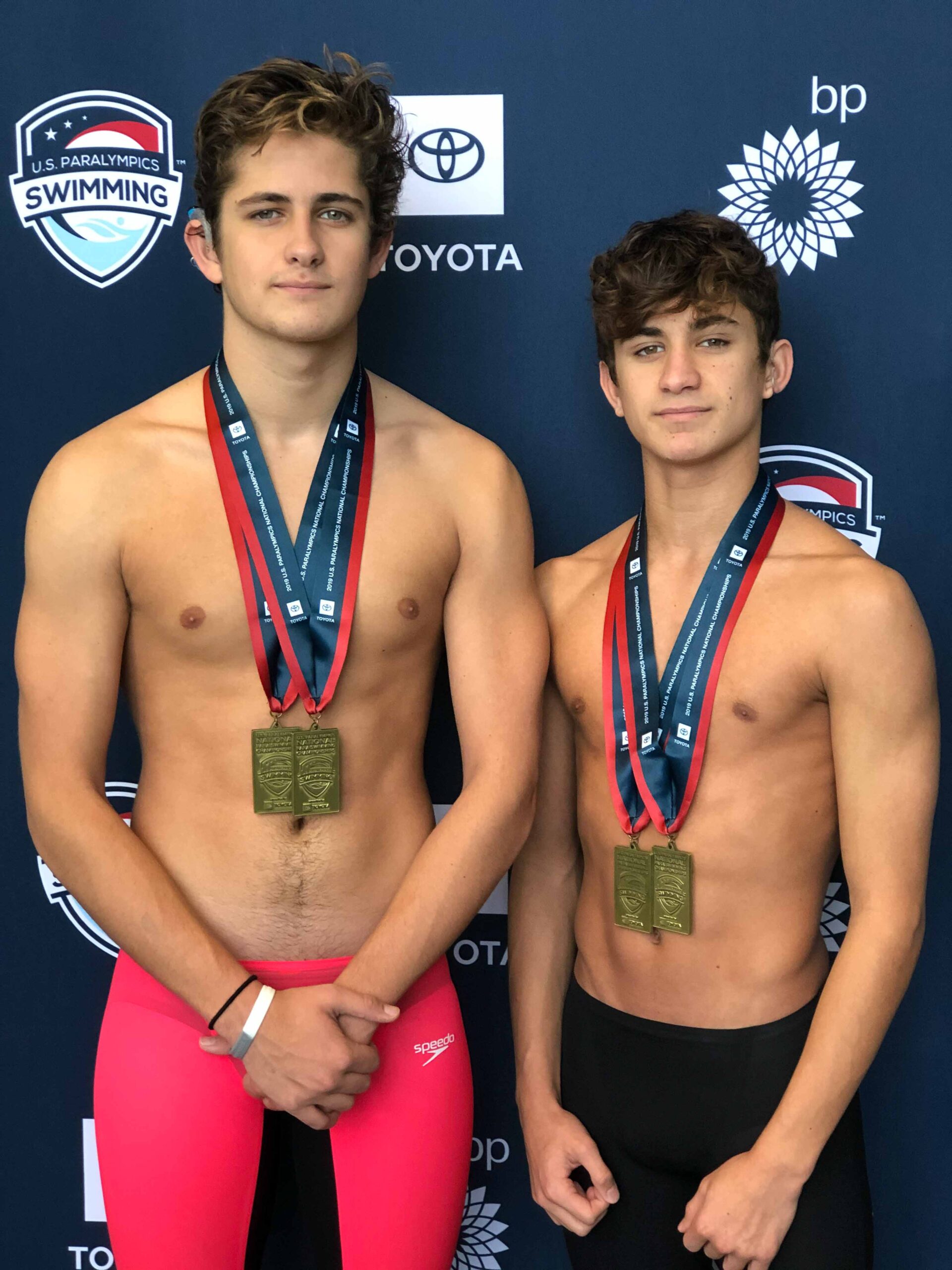
Ethan & Gavin at the 2019 U.S. Paralympics Swimming National Championships
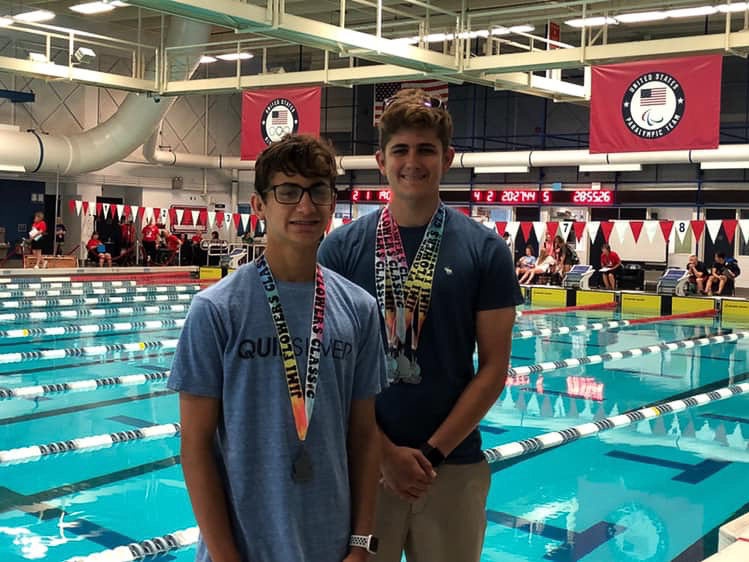
Ethan & Gavin at the Jimi Flowers Classic in Colorado (the annual U.S. Paralympics Swimming developmental and national-circuit meet) in 2019
Ethan and Gavin’s “Terry Fox” Moment
In 2010, I fundraised out of fear and worry about their future. Today, Ethan and Gavin are stepping up to be a part of the fundraising themselves and feel honored to have been asked to join the other individuals with Usher syndrome that are also participating.
For them, taking on the USH X Swim Alcatraz with the Usher Syndrome Society feels like their own Terry Fox moment, on a smaller, personal scale. Growing up in Canada, Terry Fox’s Marathon of Hope showed them what it looks like when a disabled athlete uses their strength and courage to champion a cause far greater than themselves. Every year of their childhood, they took part in the annual Terry Fox Run at school, celebrating his legacy and absorbing his relentless spirit. Over time, he became a role model for both of them, showing them that they can take real action, make a difference, and inspire others to do the same.
When I asked Ethan to share what this event meant to him he said, “Growing up in Canada, one of my favorite times of the year was the Terry Fox run. He is a hero and has always been a massive inspiration for me to stay determined, especially when things get tough. Being a part of this Alcatraz swim feels like I’m following in his footsteps to take action and do something meaningful for the Usher syndrome community.”
And Gavin echoed that inspiration through Terry Fox adding that “This swim really hits home for me knowing how close science is to actual treatments. Usher syndrome is the reason we got into swimming in the first place, and it grew into my main sport. Getting back in the water to contribute to the Usher Syndrome Society’s fundraising efforts by putting my para-swimming background to work to help find a cure feels like the perfect way to do my part.”
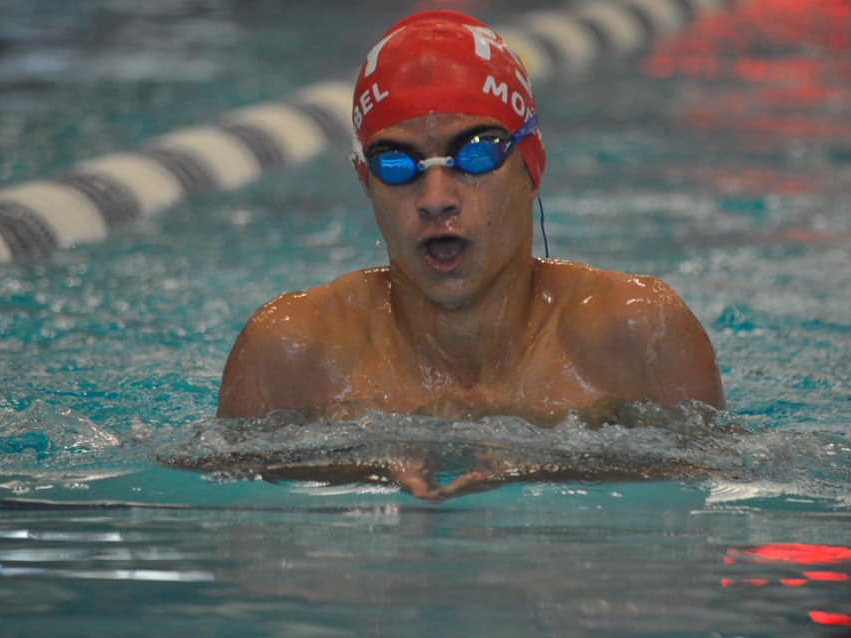
Gavin competing in 100 Breaststroke for the Scotch Plains Fanwood Y Swim Team in 2019
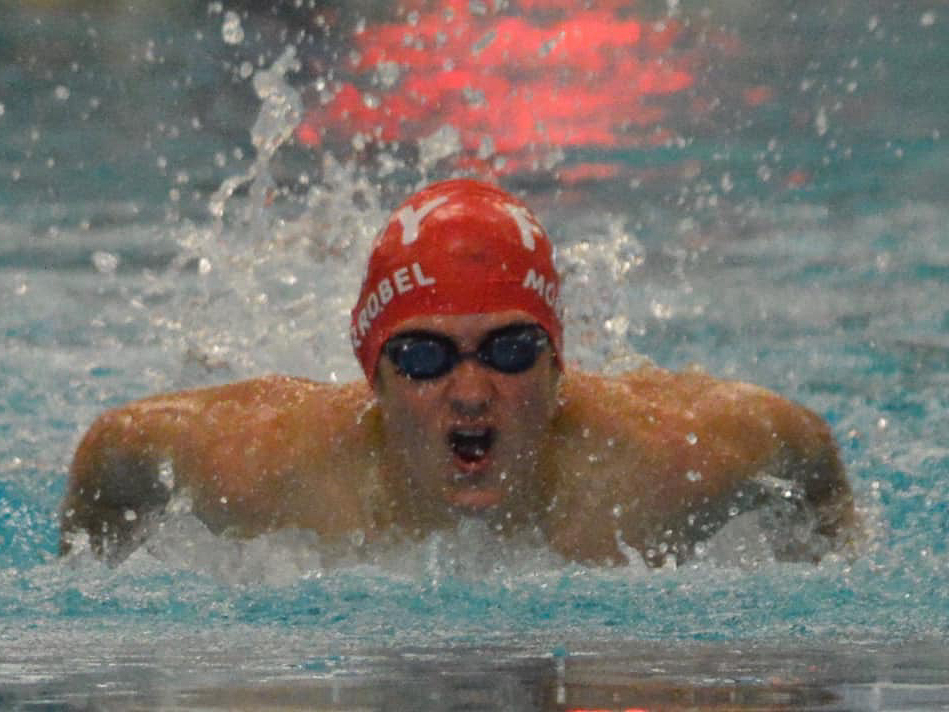
Ethan competing in 100 Butterfly for the ScotchPlains Fanwood Swim Y Team in 2019
How the Usher Syndrome Society Has Changed the Game
They are doing the swim to support the Usher Syndrome Society because the organization has fundamentally shifted what is possible in the research world.
For years, rare disease research moved in isolated silos. The Usher Syndrome Society changed that equation by directly committing millions of dollars to cutting-edge research across leading global labs. Through their USS Translational Research Grants, guided by a dedicated Scientific Advisory Board, they have strategically targeted the crucial bridge between basic laboratory discovery and actual patient treatments—funding novel gene-delivery vehicles, preclinical drug screenings, and therapies designed specifically to rescue both hearing and vision cells.
More recently, their launch of the Pipeline for Usher Syndrome Research (PUSH) at Boston Children’s Hospital has taken this momentum further, tackling multiple forms of Usher syndrome simultaneously to accelerate optimized therapeutic candidates toward human clinical trials. Where families once faced silence and dead ends, the Usher Syndrome Society has built a dynamic engine of scientific collaboration and tangible progress.
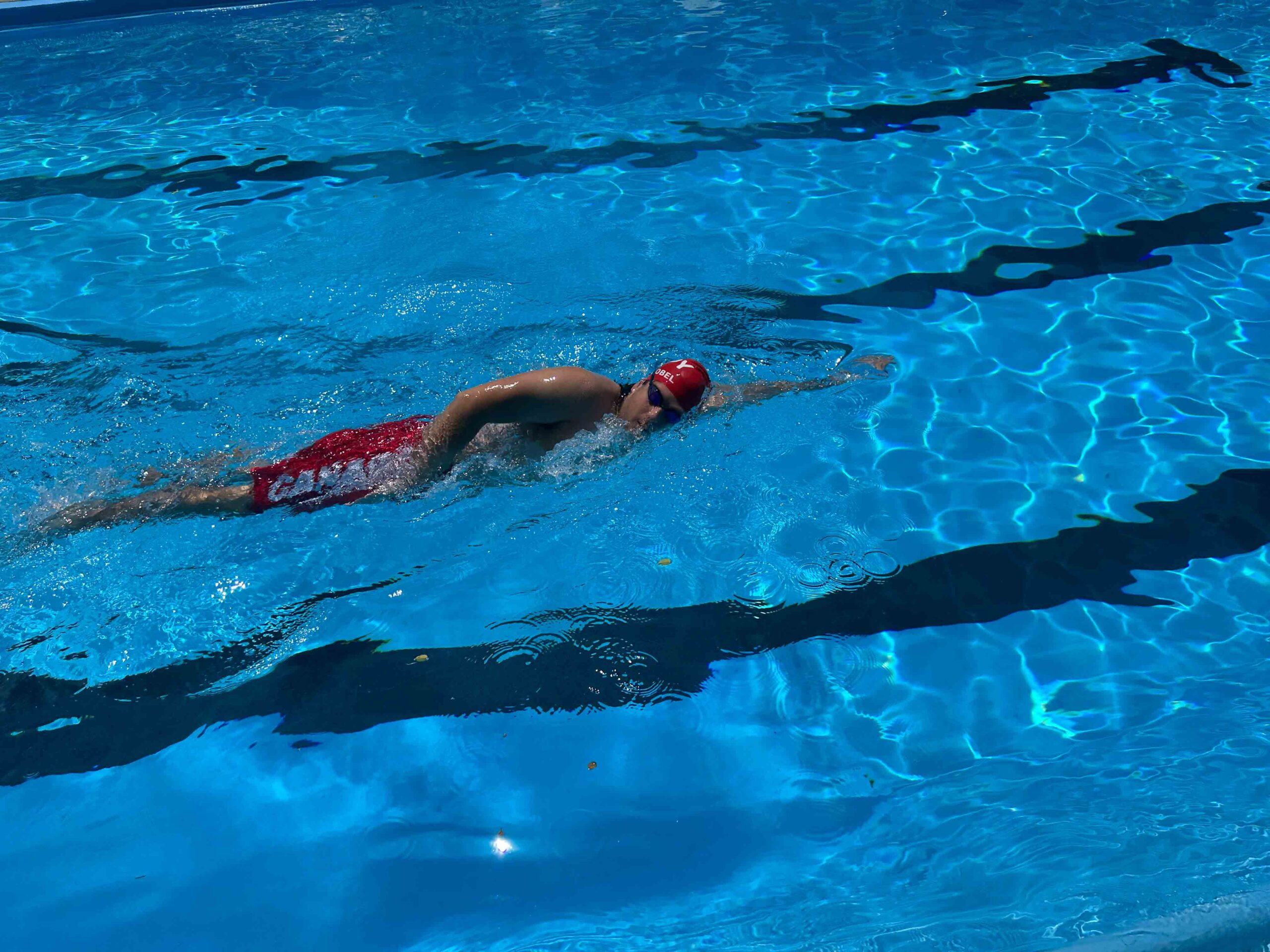
Ethan practicing in an outdoor pool for the USH X Alcatraz Swim
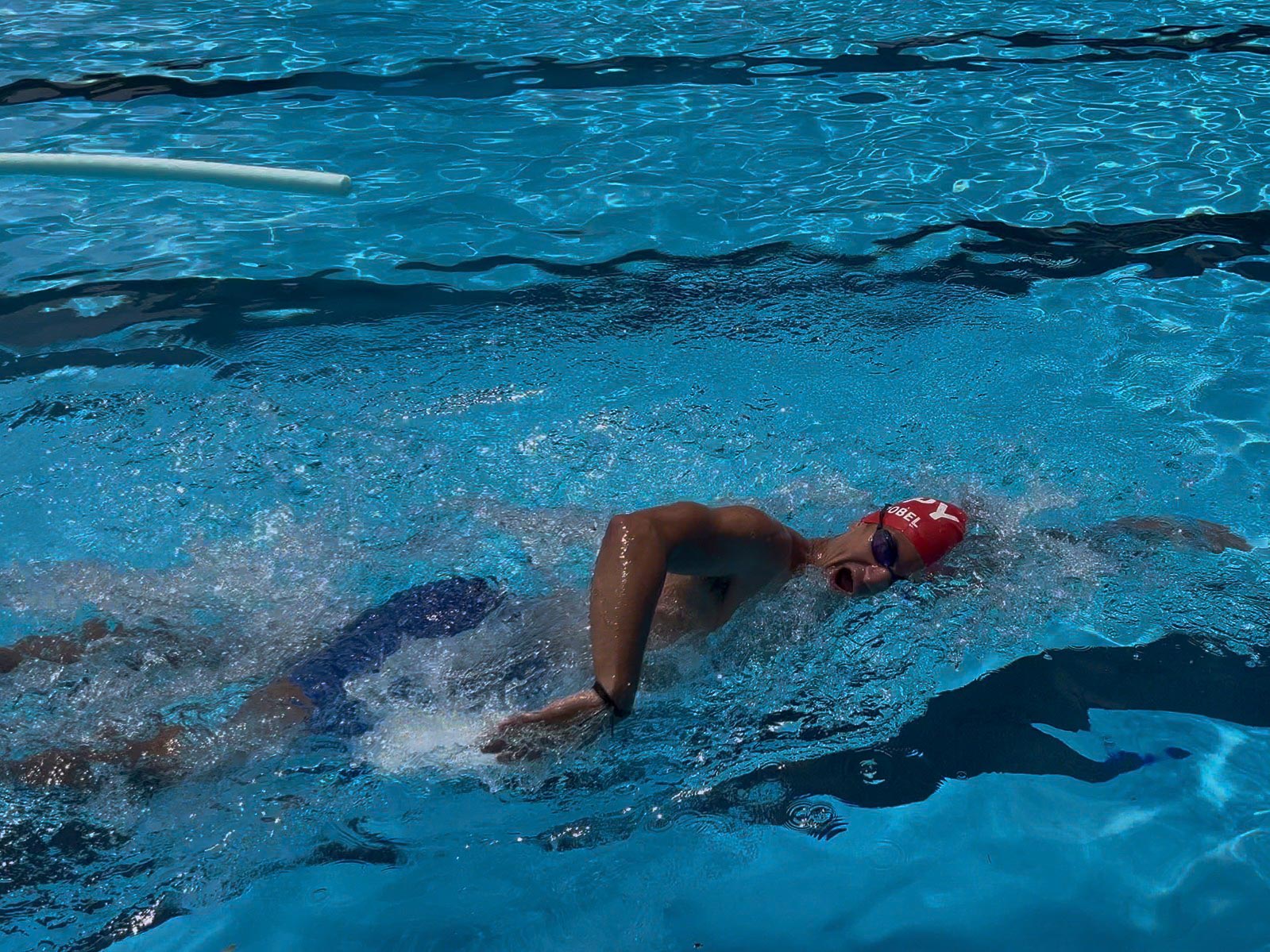
Gavin practing in an outdoor pool for the USH X Alcatraz Swim
Over a decade ago, finding a treatment seemed nearly impossible. Today, things are very different. Real treatments to slow or stop vision loss are finally within reach and that is why funding is needed now more than ever. Seventeen years after that initial diagnosis and our outreach, our family is asking for support once again, not out of desperation, but out of belief in what is possible. Every dollar raised through the USH X Swim Alcatraz directly funds the Usher Syndrome Society’s commitment to advancing life-changing research.
Finding a cure is not a solitary effort, and asking for donations is never easy or comfortable for me. But if Ethan and Gavin are willing to put in the hours of training to take on this swim, and if the Usher Syndrome Society is so dedicated to creating incredible events to raise funds and awareness, then I can certainly step out of my comfort zone and do my part, too.
So, I am asking for your help and for your donations. There are a few simple ways to be part of this effort. You can donate through Ethan and Gavin’s fundraising page, where there are direct links set up for both our American and Canadian friends and family. You can also choose to back another swimmer or give directly to the main USH X Alcatraz event page to support the whole group. Even if donating isn’t possible right now, simply sharing the event page with friends and networks helps spread vital awareness about Usher syndrome. Every single dollar and share counts, and your support directly helps pay for the research that can change lives and bring us closer to a cure.
Explore more Blog posts
From the Fast Lane to the White Cane by Carlos Harris
blog From the Fast Lane to the White Cane by Carlos HarrisSeptember 28, 2026 Life in the Fast Lane My name is Carlos and I have Usher syndrome type 2a. I am a 67-year-old gay man, am a 40-year HIV survivor and for the first half of my life, my world moved at a...
Life in the Lab: How Do We Know If a Potential ASO Therapy Works? by Katerina Anamisis
blog Life in the Lab: How Do We Know If a Potential ASO Therapy Works? Spoiler: It's more complicated than you might think. by Katerina AnamisisAugust 26, 2026 In my last blog, The Diagnosis that Changed my Trajectory, I shared how my brother’s diagnosis of Usher...
The Starting Line by Sara Jessick
blog The Starting Line by Sara JessickAugust 25, 2026 My First Usher Syndrome Conference I stood near my apartment door, my carry-on suitcase full of clothes that I had carefully curated for several “first-impression moments” in my immediate future. And despite being...
Help us find treatments and a cure.